The Fox Theatre — A Joplin Landmark That Has Stood the Test of Time
Historic Tuesdays with Adisyn
What do you think?
JOPLIN, MO. — Nearly a century ago, a new entertainment destination opened its doors in downtown Joplin, bringing a little bit of Hollywood glamour to Southwest Missouri.
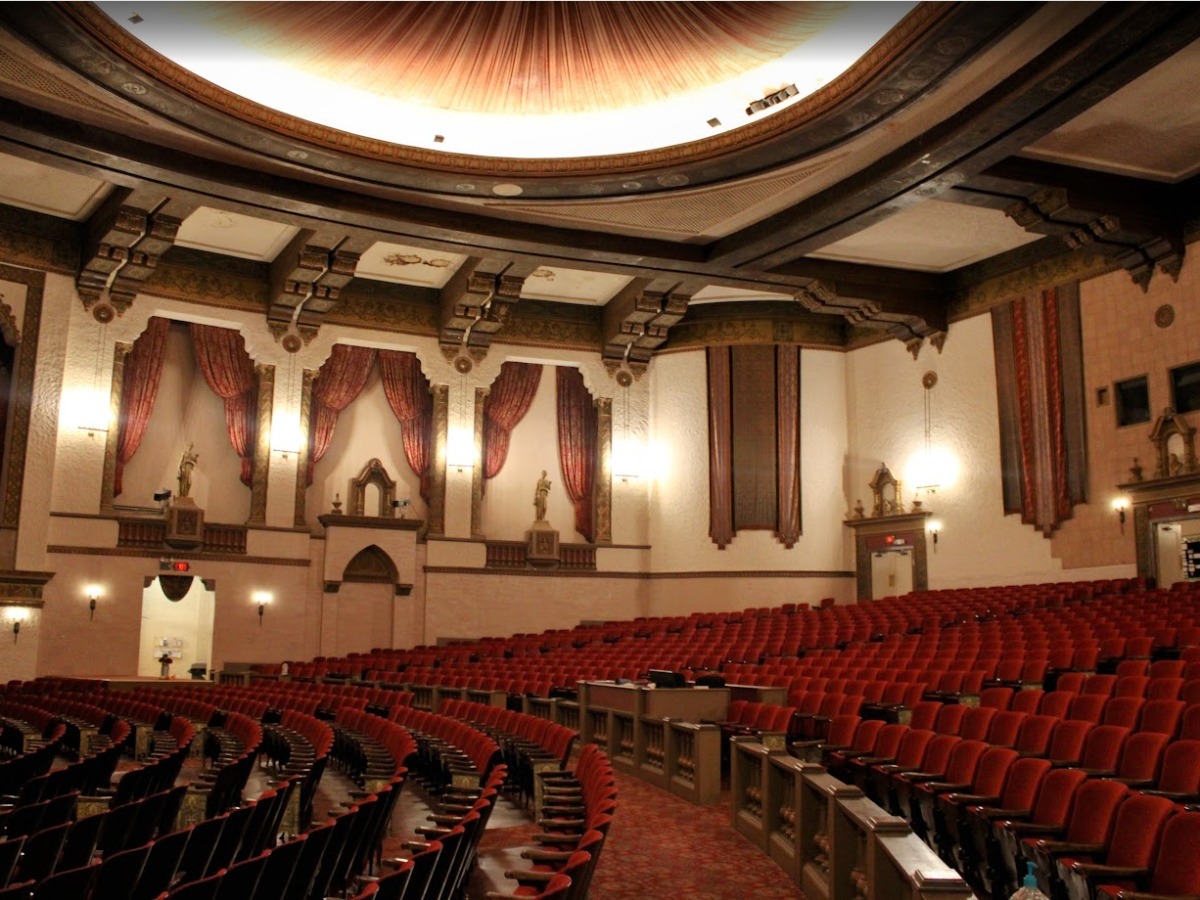
With its elaborate Spanish Revival architecture, grand auditorium and seating for approximately 2,000 people, the Fox Theatre quickly became one of the city's most recognizable gathering places. It offered residents an escape through movies, live performances and an experience unlike anything else in the area.
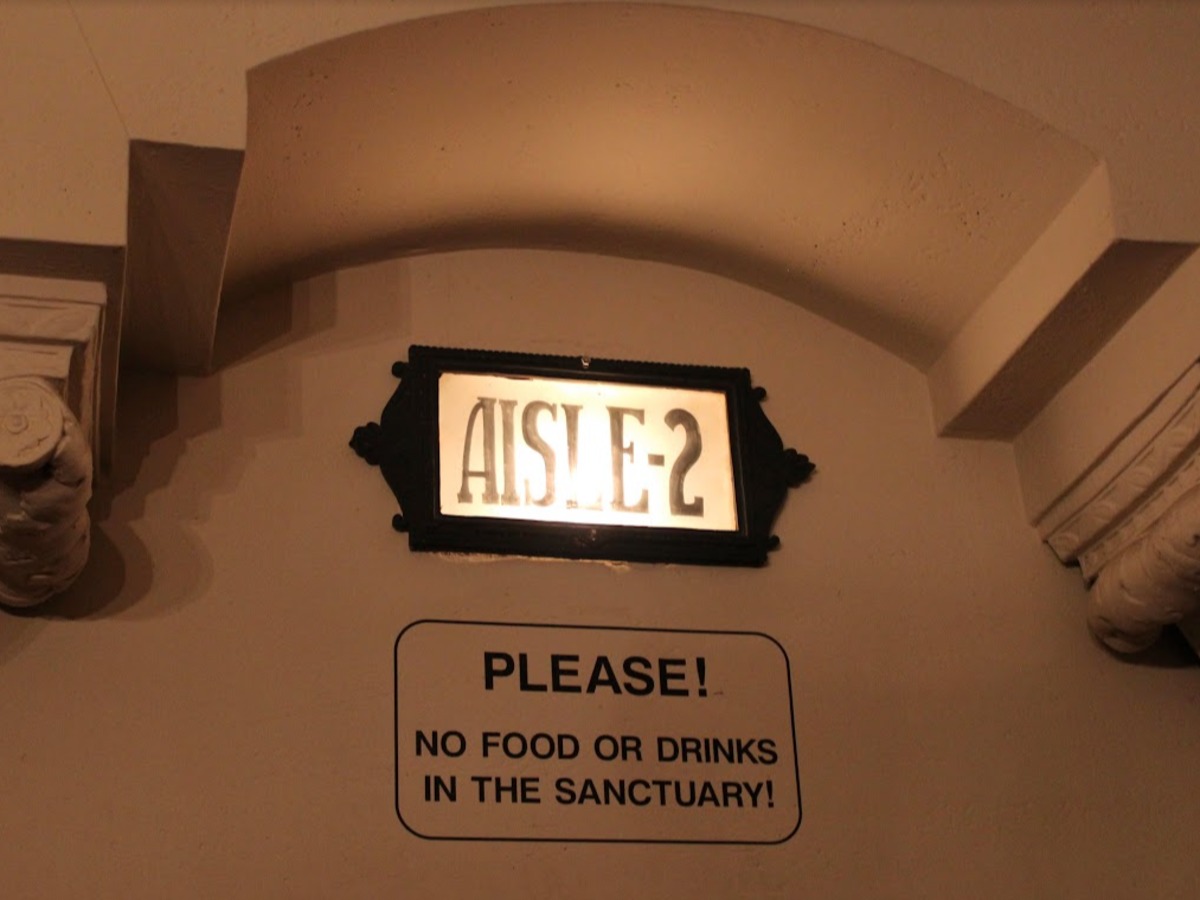
Today, the building at 415 S. Main St. has a different purpose. It is home to Central Christian Center, but much of the original theater remains, including its ornate interior details, original seating and curtains, ticket booth and a mural that has been part of the building for generations.
Gary Shaw, executive administrator of Central Christian Center, has spent nearly 48 years working at the church and caring for the former theater. He has also served 24 years on Joplin City Council, including two terms as mayor.
For Shaw, preserving the building has meant recognizing that its value extends beyond the congregation that uses it.
"One of the things I learned on historic preservation from a clinic in Kansas City was that people own these historic buildings, but actually they belong to the community, and we're just caretakers of it," Shaw said.
That philosophy has helped guide the church's approach to the Fox. Although its purpose has changed, the building remains a reminder of a time when downtown Joplin was a regional entertainment destination and going to the movies was an event in itself.
Entertainment in Joplin before the Fox
To understand why the Fox Theatre became such an important part of Joplin's history, it helps to look at the city's entertainment scene before the building was constructed.
Joplin's entertainment industry began developing alongside the community itself. Following the discovery of lead deposits in the 1870s, the mining industry attracted workers, businesses and residents. As the city grew, commercial buildings began appearing throughout downtown, including spaces dedicated to live entertainment.
One of the earliest known entertainment venues was the Joplin Theater, located at 410 Main St.
The one-story frame building hosted vaudeville acts and live stage performances. According to the building's National Register of Historic Places nomination, area miners sometimes paid admission using lead ore, which served as a form of currency in the mining community.
The original building was eventually demolished, but other theaters followed.
As motion-picture technology advanced in the early 1900s, movie theaters began appearing across the country. In Joplin, some existing buildings were converted into movie houses, while others were constructed specifically for motion pictures.
One of the city's most notable theaters during the 1920s was the New Joplin Theatre, built in 1920 near the southwest corner of Seventh and Joplin streets. The two-story building featured Renaissance Revival architectural details and was considered the city's most prominent theater of that decade.
It stood for less than two decades before being demolished in the 1930s.
By the late 1920s, motion pictures had become one of the country's primary forms of entertainment. The introduction of talking pictures and other technological advancements helped make moviegoing increasingly popular.
Joplin was part of that growing entertainment culture, and the city was preparing for something much larger.
The architect behind the Fox
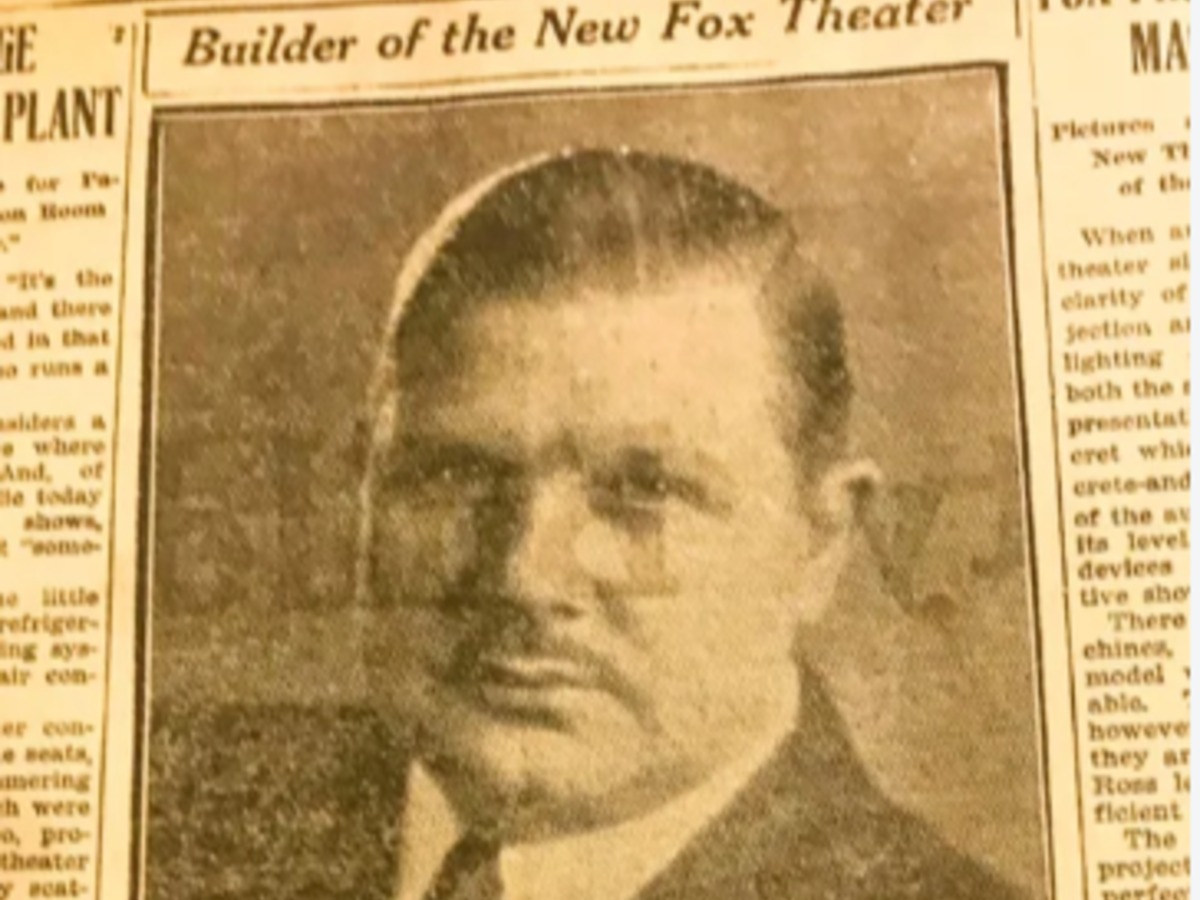
The idea for the Fox Theatre began in 1927 with Chicago-based theater architect L.P. Larsen.
Larsen established the Joplin Building Corporation and secured financial backing for the project. His original vision was even more ambitious than the theater that eventually opened.
The initial proposal called for a theater and a 12-story hotel complex. However, the hotel portion was later determined to be financially unfeasible, so the corporation focused its efforts on constructing a first-class theater.
In 1929, the Joplin Building Corporation purchased a large property along Main and Virginia streets and began developing the project.
Larsen also negotiated an agreement with Fox Midland Theaters Corporation, the Kansas City-based operation that agreed to lease and operate the building for 20 years after its completion.
The theater was named in recognition of the company that would operate it.
Seven months of construction
The Fox Theatre was built by the Gillioz Construction Company of Monett, Missouri.
The project took approximately seven months to complete and cost an estimated $500,000. During construction, as many as 300 workers were employed on the project at one time.
The scale of the project was significant, particularly considering the economic conditions surrounding its construction.
The Great Depression began in 1929, just as the theater was being developed. Despite the difficult economic climate, the project moved forward and eventually brought one of the most elaborate entertainment buildings in the region to downtown Joplin.
The finished building was two stories tall, constructed of brick and designed in an unusual L-shaped layout. Its stage measured approximately 65 feet wide, and the auditorium could accommodate around 2,000 guests.
It was the largest theater in Joplin at the time.
Shaw said the construction itself is still impressive to consider.
"At one time there were as many as 300 people working on this building at one time. Cost $500,000 back in 1930," he said.
The building's construction also included substantial structural elements. Shaw pointed out the thick concrete walls in the basement, which help support the structure.
But the Fox was designed to be more than a large place to watch a movie. Larsen wanted the building to provide an experience from the moment guests arrived.
A Spanish palace in downtown Joplin
One of the Fox Theatre's most significant features is its architecture.
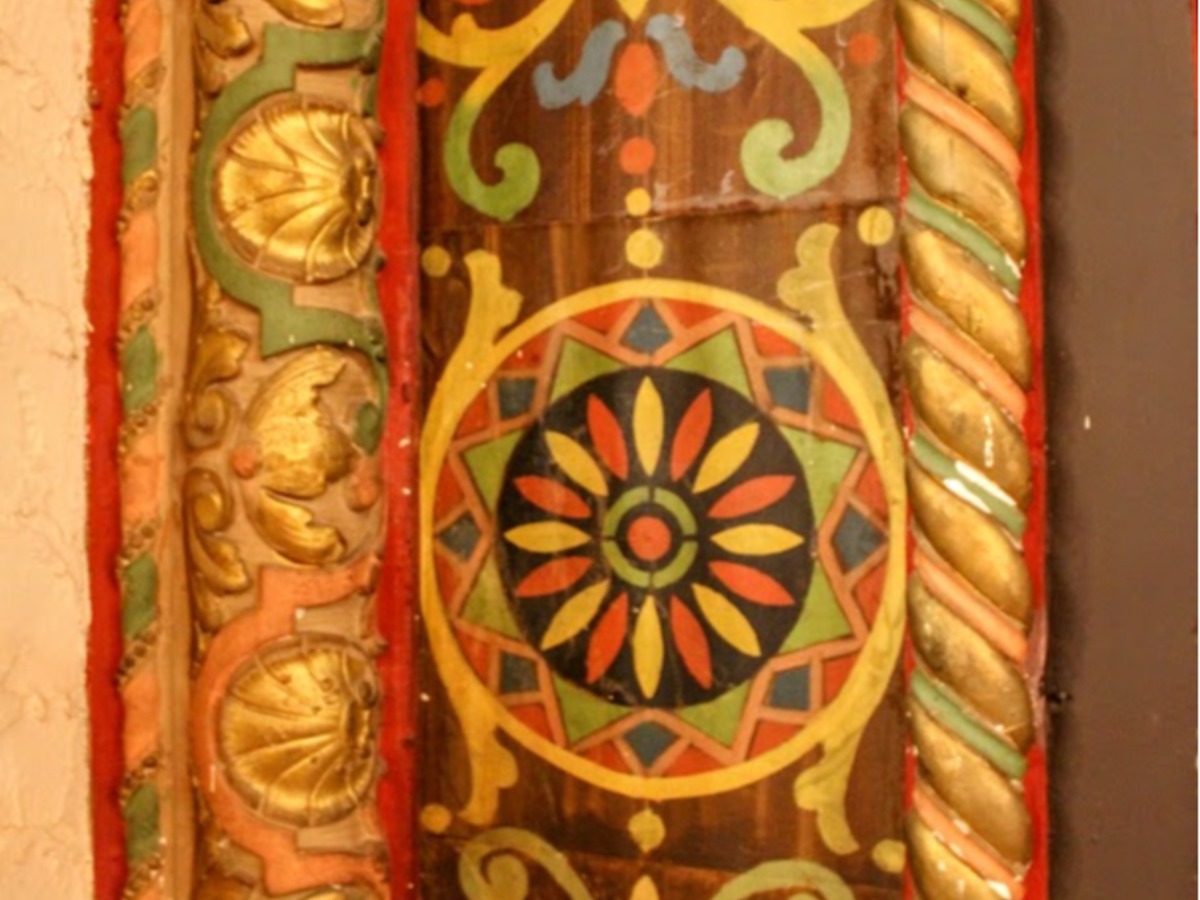
The building was designed in the Spanish Revival style, with additional Byzantine and Moorish influences. Larsen drew inspiration from Spanish palaces of the 16th and 17th centuries, incorporating decorative elements throughout both the exterior and interior.
The National Register nomination describes the Fox as the most ornate movie palace constructed in Joplin.
The Main Street facade was designed to make an impression. Its decorative brickwork and terra cotta details distinguish it from the more traditional commercial buildings surrounding it.
Terra cotta, a fired clay material commonly used in historic architecture, appears throughout the exterior in decorative columns, floral designs, diamond patterns, panels, cornices and other architectural details.
The upper facade features textured brickwork arranged in diamond-shaped patterns, yellow glazed terra cotta piers, a decorative cartouche and floral ornamentation.
Along the roofline, a broken pediment is topped with terra cotta urns resting on decorative pedestals. Additional details include floral panels, shield designs and ornamental molding.
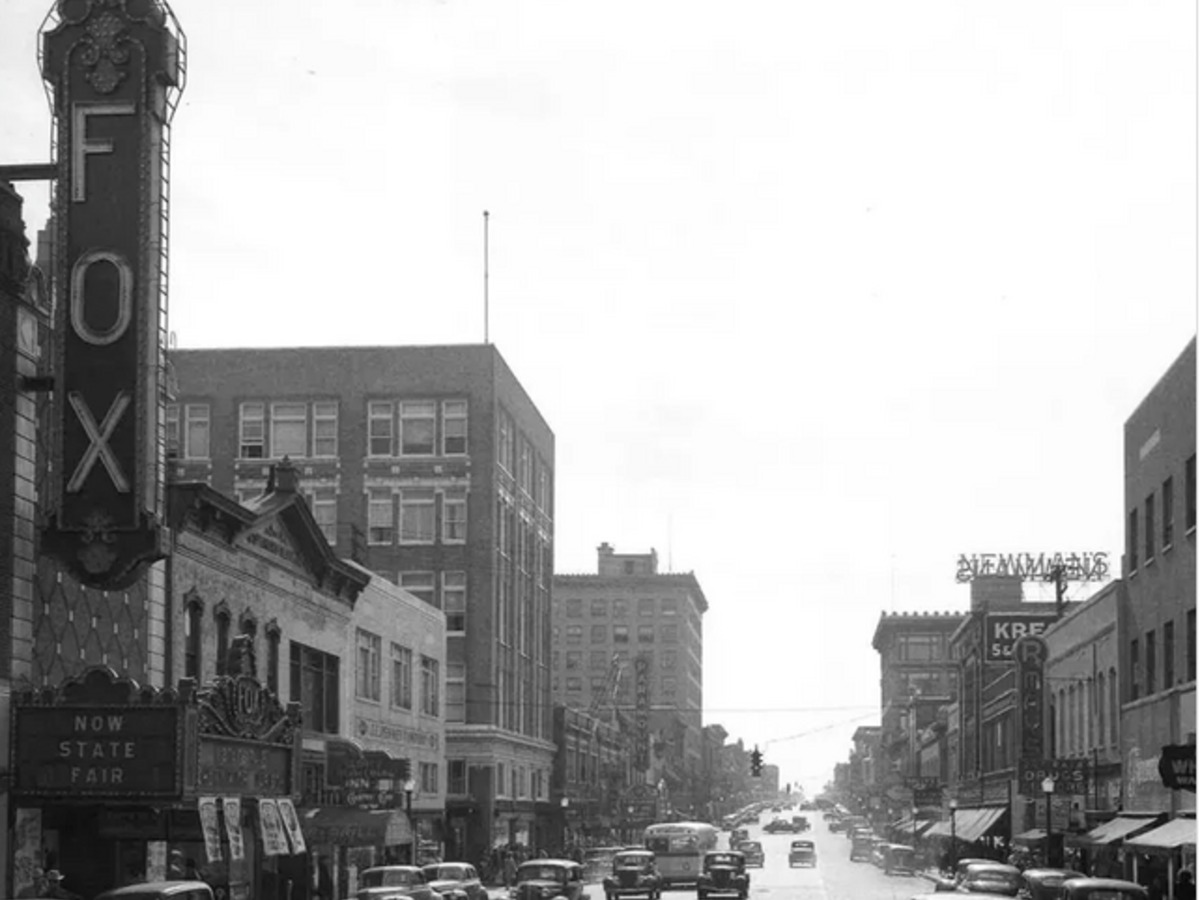
The Main Street entrance was recessed into the facade and originally featured a large metal-and-glass marquee with curved gables.
A large neon sign extended perpendicular from the building. According to the National Register nomination, it was the largest neon sign in Missouri when installed.
The sign was eventually removed. Shaw said it was already gone by the time the church took ownership of the property in 1974. The entrance structure had deteriorated, and the church later removed what remained.
The nomination also noted that the building's Main Street facade was the only remaining example of its particular Spanish Revival design in downtown Joplin.
Inside the theater
The elaborate design did not stop at the front doors.
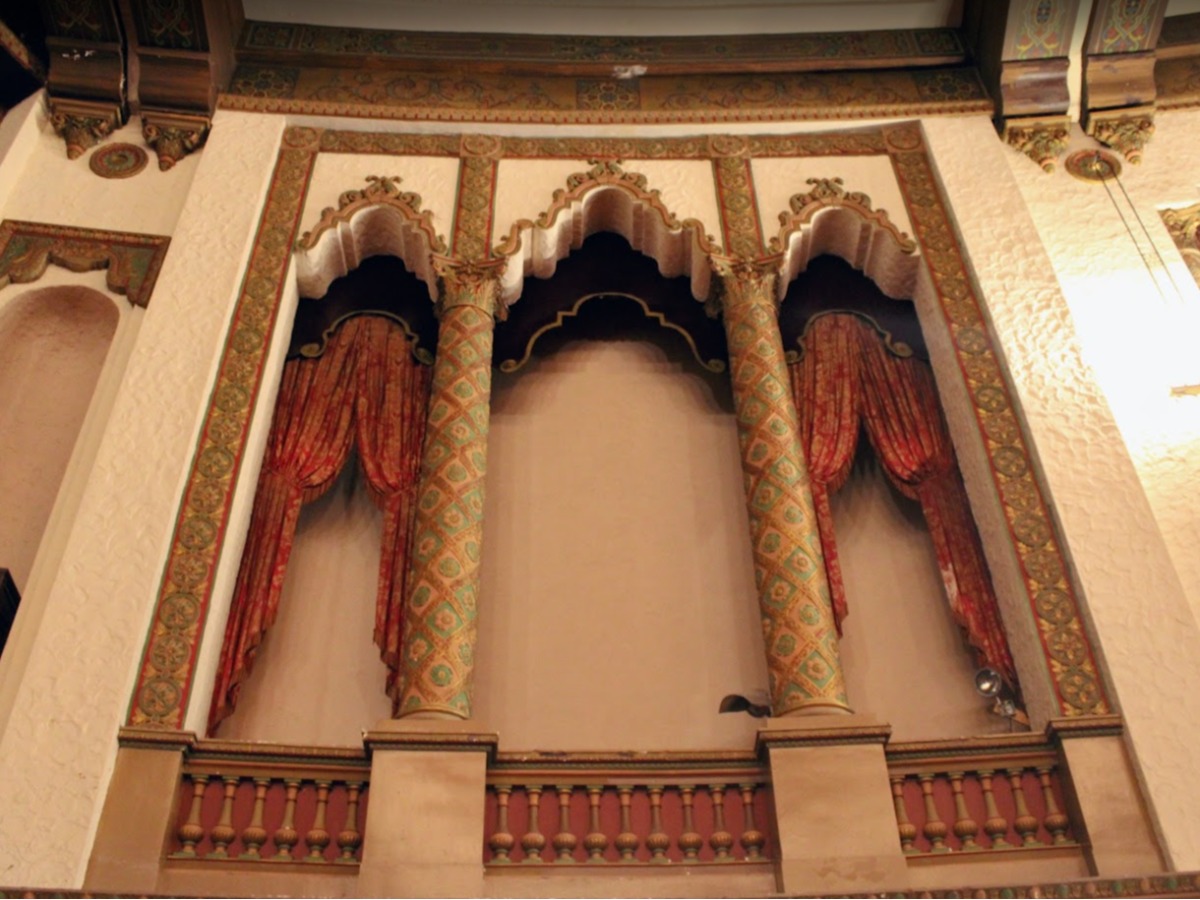
The Fox's interior was decorated with Spanish Revival details, including decorative plasterwork, wood ornamentation, columns, arches, alcoves and ornamental molding.
The original Main Street entrance included a vestibule with terrazzo and multicolored glazed tile flooring. Decorative plaster molding ran along the walls and ceiling, featuring patterns such as egg-and-dart, bead-and-reel, dentil and leaf-and-dart designs.
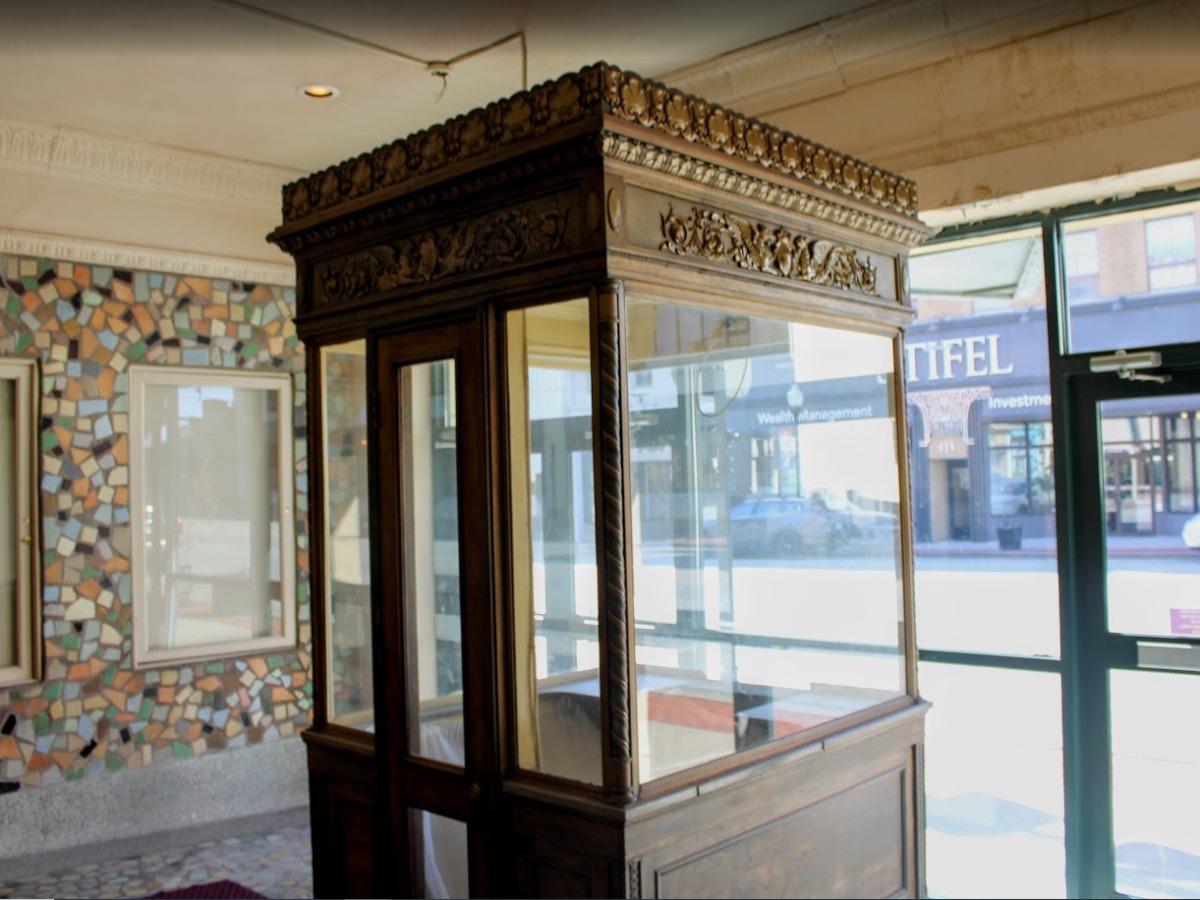
A freestanding ticket booth stood within the entrance. It featured a terrazzo pedestal, large windows with copper framing and decorative plaster columns at its corners.
The ticket booth is still in the building.
Shaw said he once tried to donate it to a local museum, but the museum did not have room for it. The church kept the booth, and it remains one of the visible connections to the building's movie theater days.
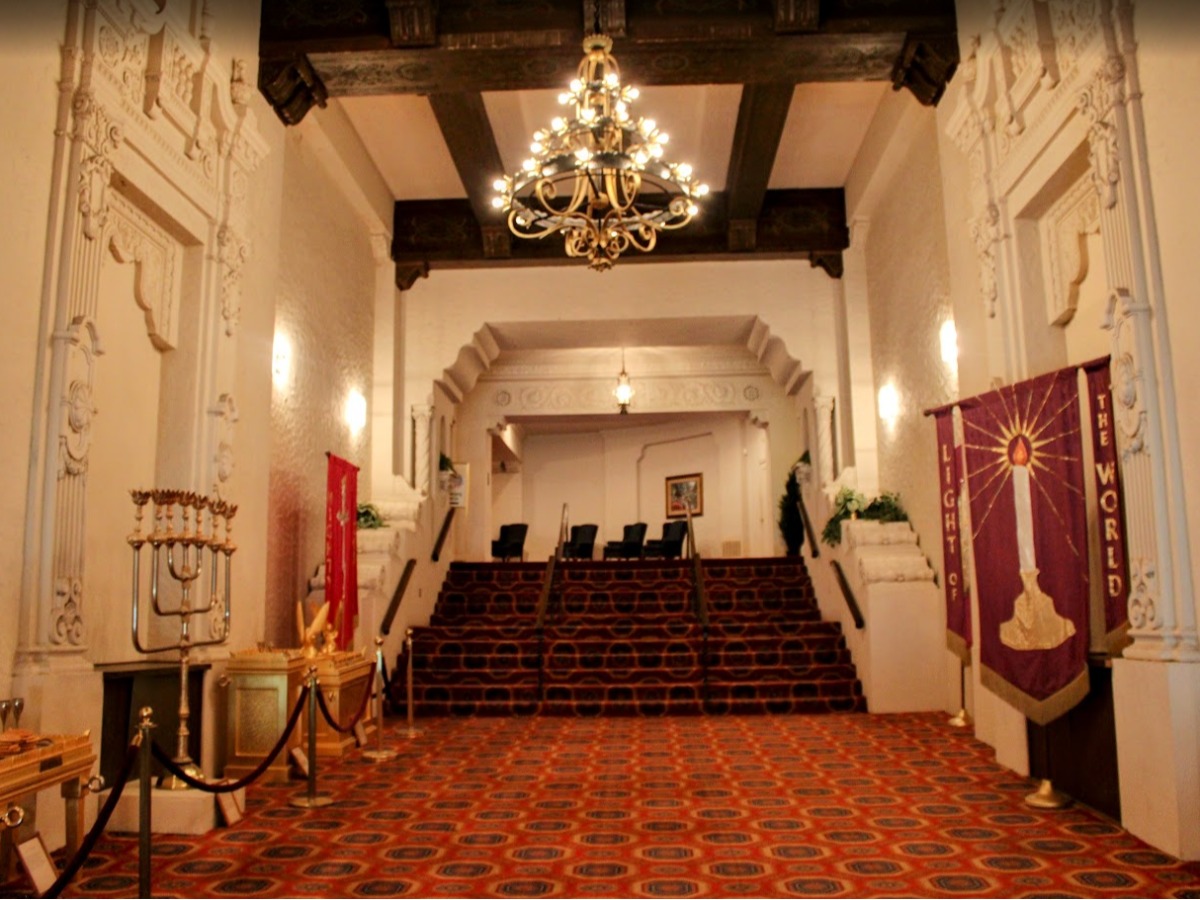
From there, guests entered a hallway connecting the Main Street entrance to the theater's lobby and auditorium.
The hallway featured textured plaster walls and ceilings, coffered wood beams, recessed alcoves and corkscrew columns topped with Ionic-style capitals.
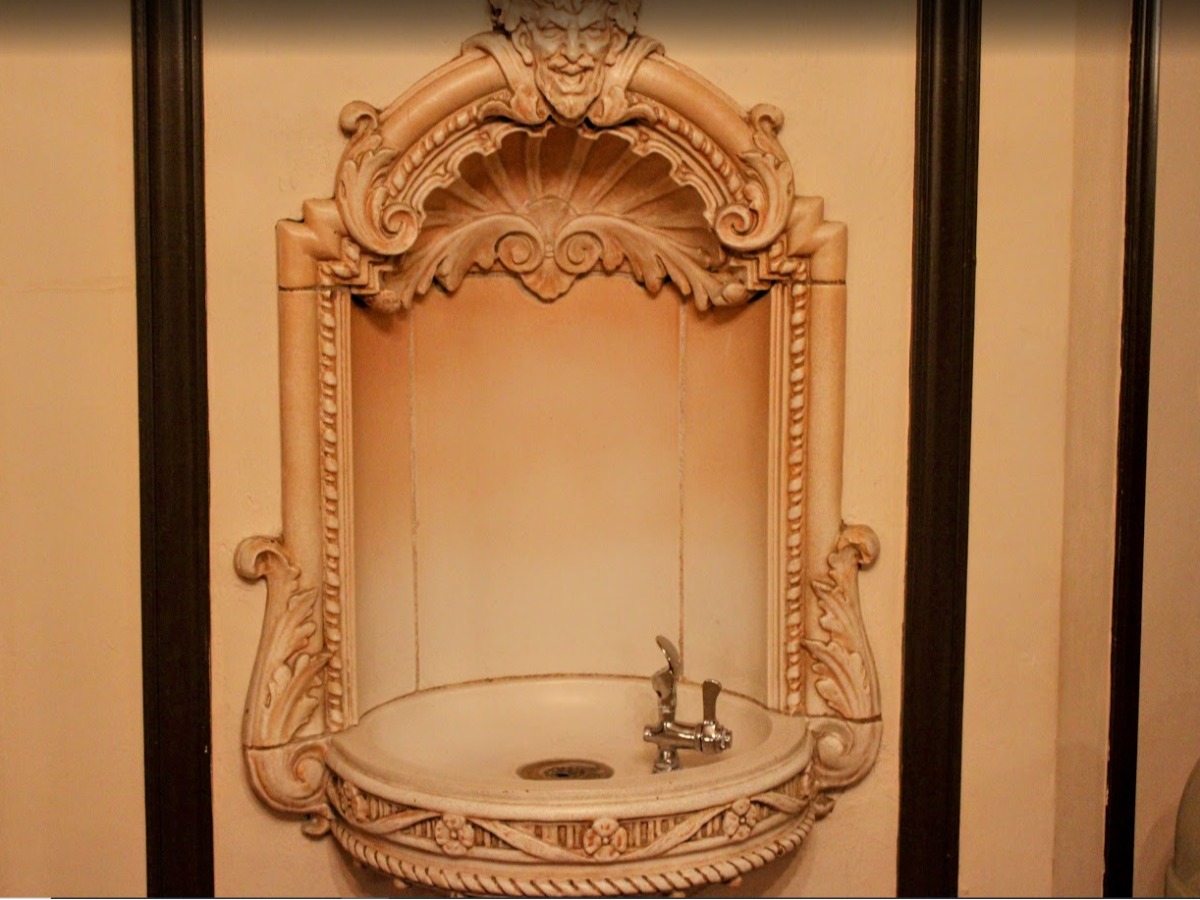
The lobby and other interior spaces featured additional decorative elements, including plaster ceiling medallions, chandeliers, marble drinking fountains with terra cotta surrounds and ornate door frames.
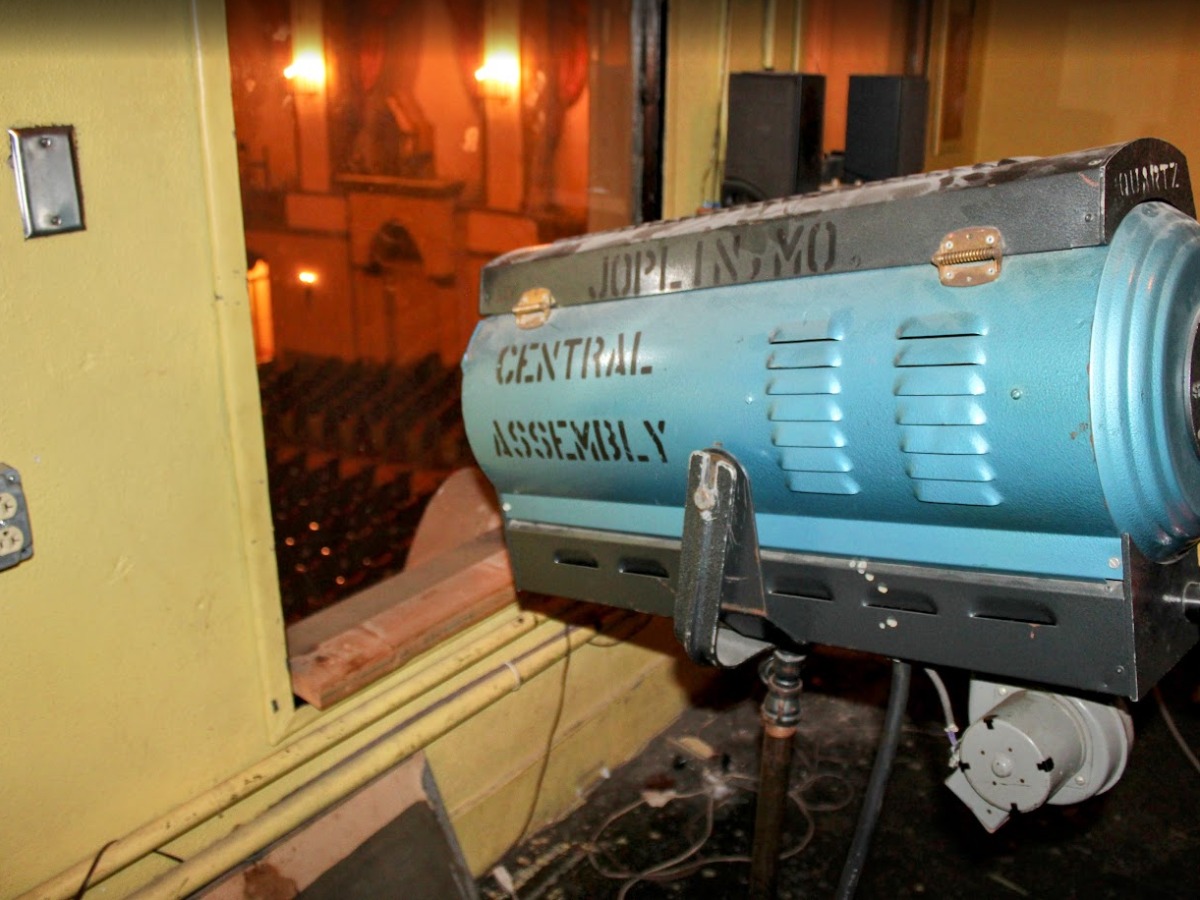
The second floor included separate men's and women's lounges, along with the theater's original projection booth.
A mural that remains today
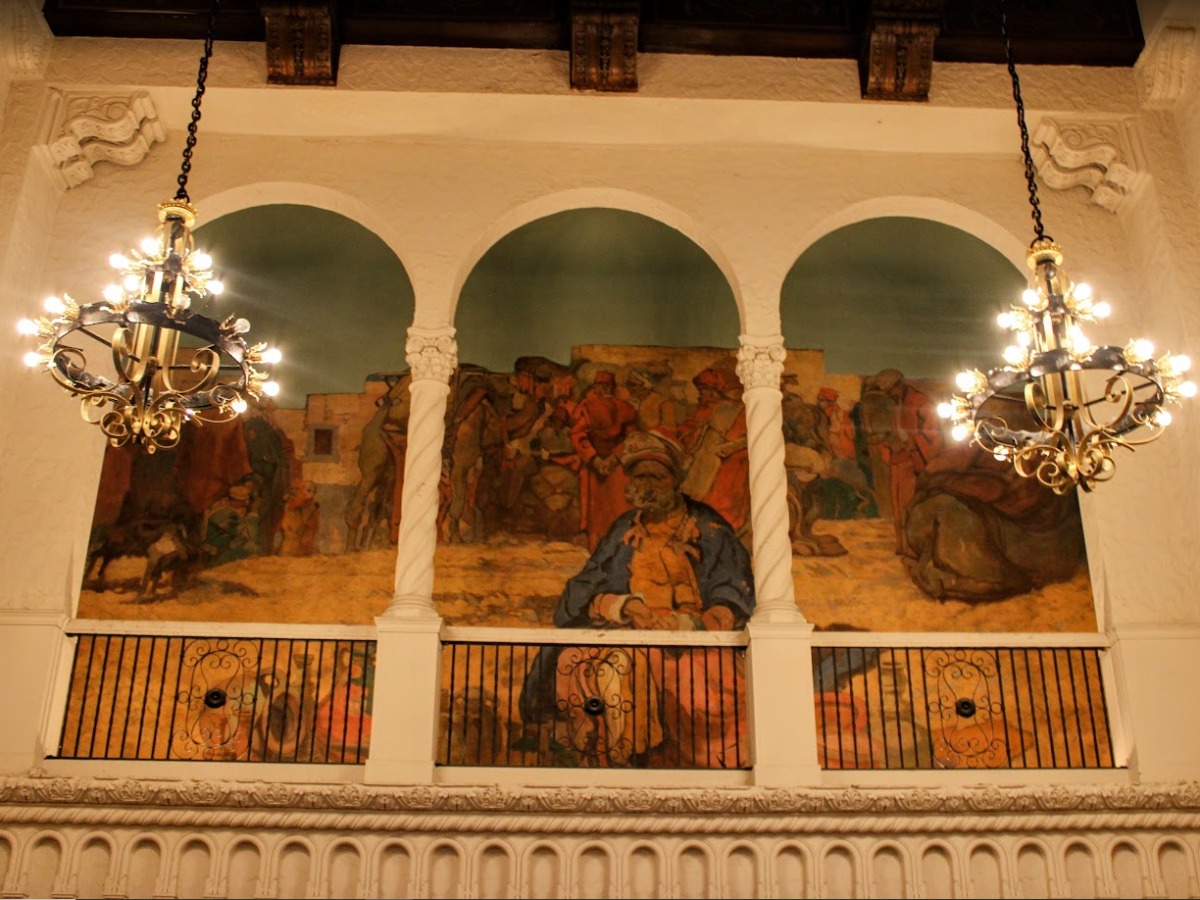
One of the building's most distinctive pieces of artwork is a mural titled The Potter.
The mural was documented in the Fox Theatre's National Register nomination and is located behind a decorative triple-arched feature above the doors leading from the entrance vestibule. The nomination attributes the artwork to artist Dean Cornwell and describes a scene connected to the Moorish conquest of Spain.
Shaw said the image has another interesting part to its history.
He explained that the mural was based on a photograph the building's architect kept in his home. A duplicate of the image was then created as a mural in the theater's entrance.
Shaw has shared the story with visitors over the years, including a particularly memorable encounter with a family connected to the original architect.
While giving a couple visiting from California a tour of the building, Shaw began explaining the mural and its history. The man told him the artist behind the image was his grandfather.
Shaw later had the opportunity to meet both the grandson and the architect's son.
The mural remains inside the building today, providing a direct connection to the Fox's original design.
Shaw offered another perspective on the mural, relating its imagery to scenes he encountered during his travels to Israel. He recalled making approximately 23 trips to the country during the 1970s, where he saw shepherds tending their sheep and goats in the countryside, similar to the scene depicted in the mural.
Its continued presence is significant because it shows how much of the theater's artistic character has survived. While the building has been adapted for a different purpose, the mural remains part of the experience for people who walk through its doors.
The auditorium: Designed for an experience
The auditorium was the centerpiece of the Fox Theatre.
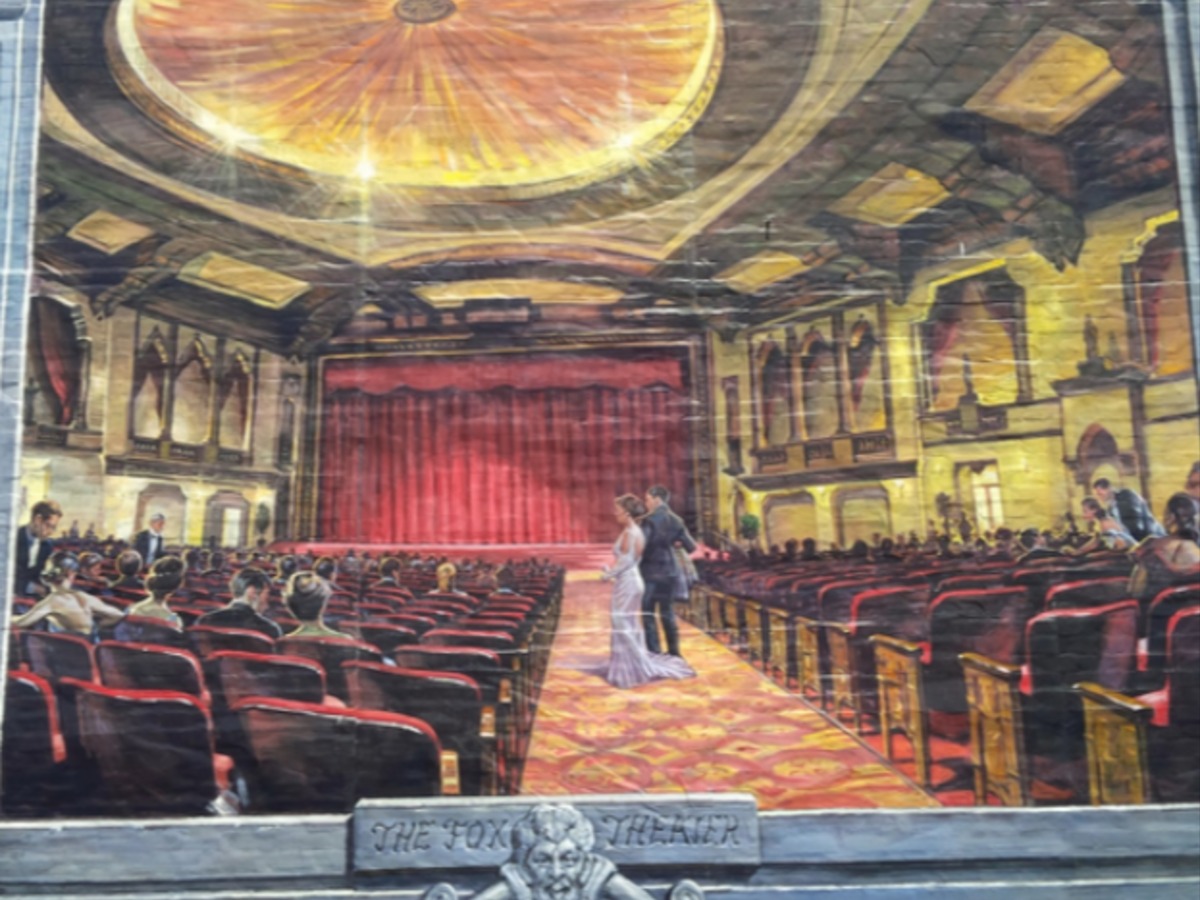
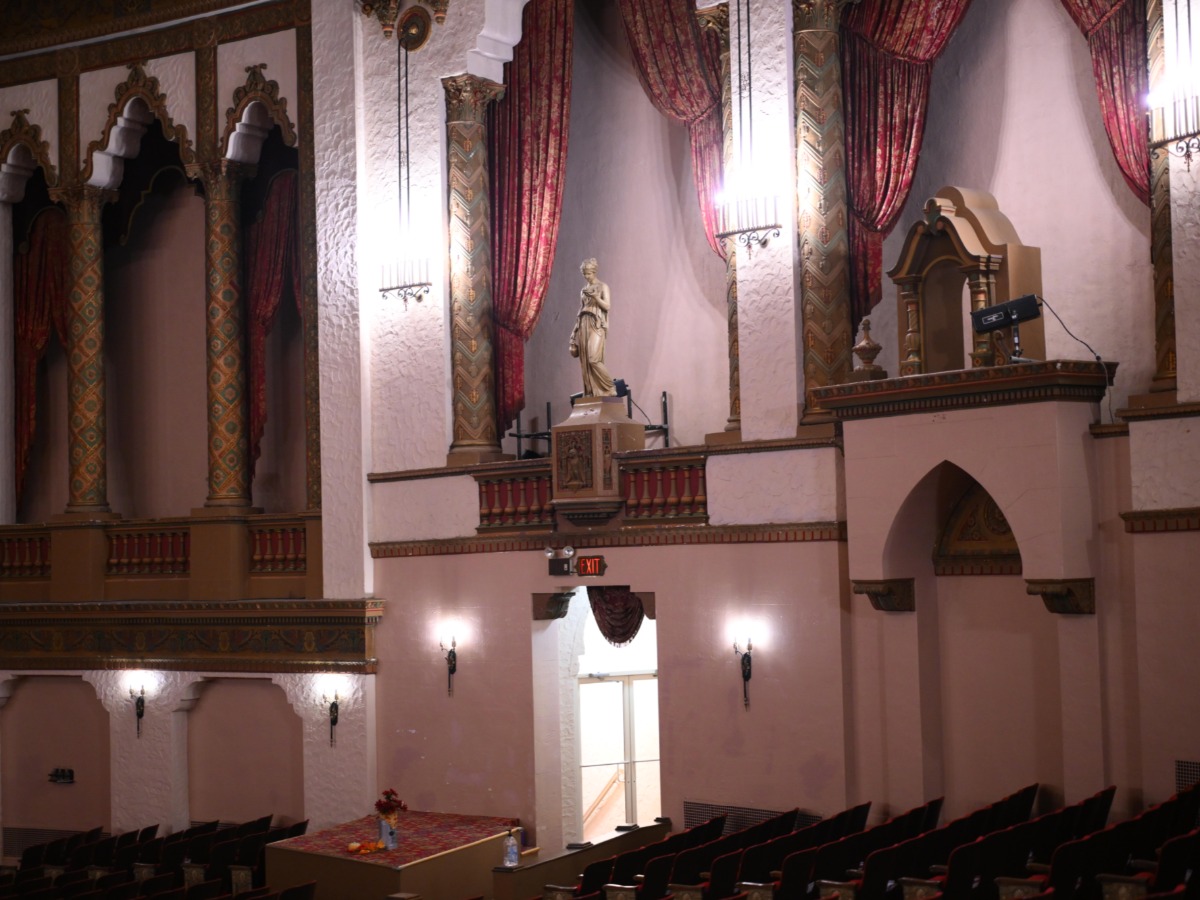
Its large, semicircular seating area was designed to give guests a view of the stage and movie screen while surrounding them with elaborate architectural details.
The ceiling featured decorative coffering painted to resemble wooden beams, surrounding a large circular opening known as an oculus, with an original decorative plaster medallion at its center. A large circular curtain was added about six months after the building's construction, possibly to improve the auditorium's acoustics.
According to Gary Shaw, the church later lowered the curtain using a large hoop-like support so it could be cleaned. The side drapes have also been cleaned as part of the church's efforts to preserve the building's original features.
Along the auditorium walls were recessed alcoves framed by columns and decorative panels. The alcoves included ornamental balustrades, statuary and red draperies.
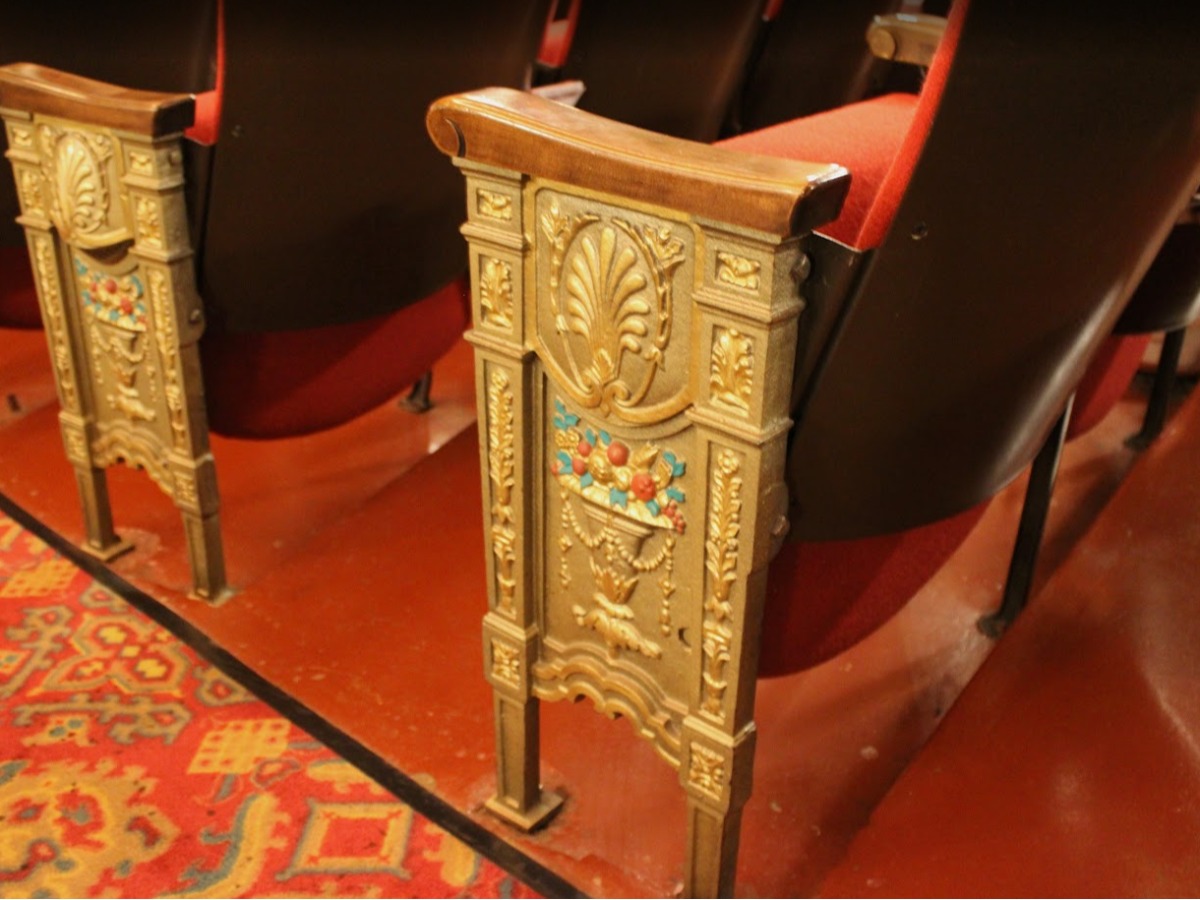
Many of the curtains hanging in the auditorium today are original as well as the original theatre seats.
They were installed by a Chicago company in 1930. After decades of use, the seats eventually needed significant attention.
Shaw said the church contacted the original company about restoring them. The company estimated the work would cost nearly $200,000.
Instead, the church hired two workers to remove about three rows of seats each week. They took the seats to the church's shop, recovered and repainted them, then returned them to the auditorium.
The entire project cost less than $70,000.
"They're fairly updated, but they are original," Shaw said.
The restoration allowed the church to continue using the seating while preserving an important piece of the theater's history.
At the front of the auditorium, the stage featured a decorative proscenium arch. The stage area was designed to accommodate live productions as well as motion pictures.
That flexibility was important. The Fox was not built exclusively as a movie theater. Its wide stage and performance space allowed it to host live entertainment, making it a multipurpose destination for the community.
Technology ahead of its time
Along with its elaborate architecture, the Fox was considered one of the most modern entertainment venues in Joplin when it opened.
The theater included separate ventilation systems for heating and air conditioning, an important feature during a time when air conditioning was not common in many public buildings.
It also featured advanced sound equipment, an oversized movie screen and a dedicated projection booth on the second floor.
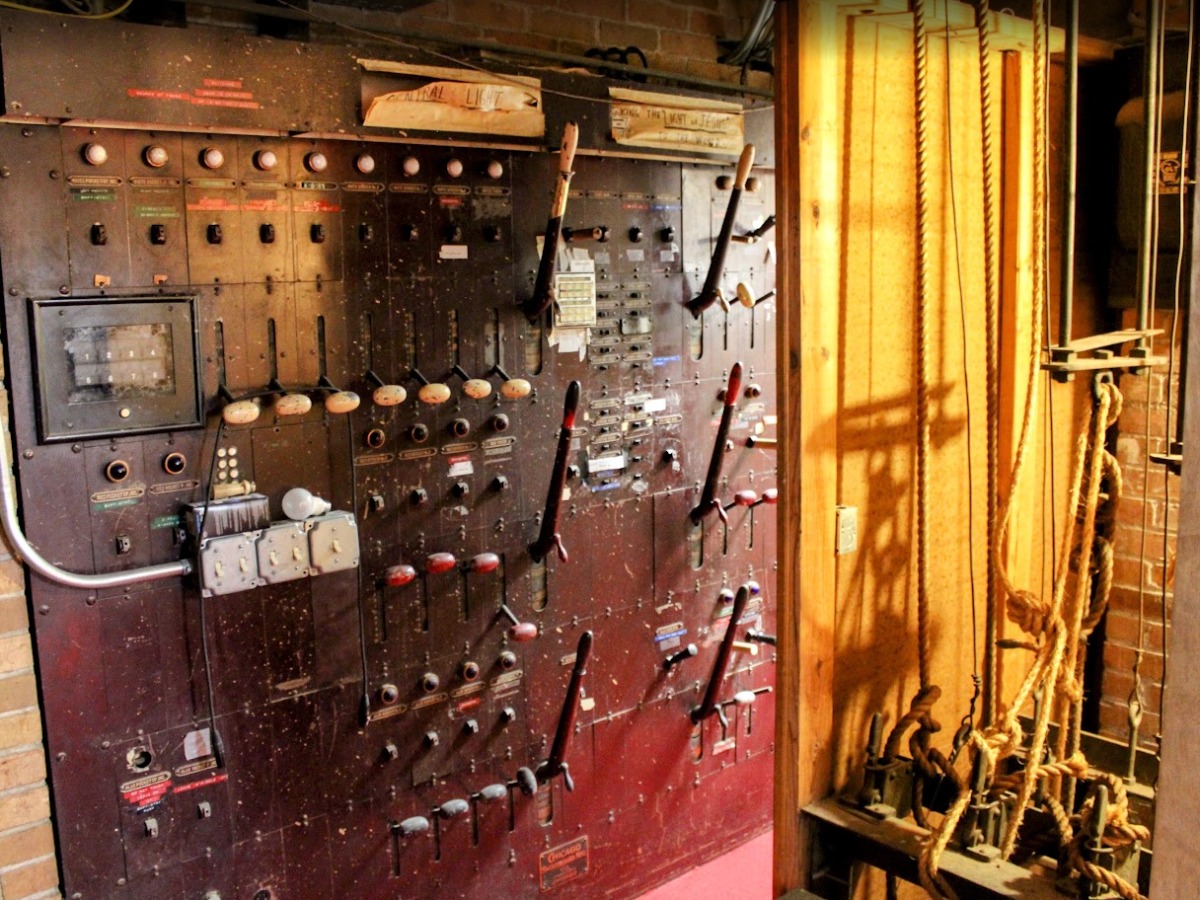
A lighting board located just offstage controlled floodlights, footlights and concealed lighting. The system allowed the theater to create different effects for live performances and other presentations.
Larsen also paid close attention to soundproofing. Decorative draperies were incorporated into the design, with some of the fabric cut and sewn in his Joplin workshop.
The building's original ventilation system has left behind another unusual feature.
Shaw said that when the church first took ownership, workers discovered low tunnels beneath the auditorium. They were approximately four feet tall and ran beneath the seating aisles.
The spaces were part of the building's cold-air return system. Shaw said they were filled with popcorn that had fallen or been pushed through openings between the seats over the years.
The church had to remove the accumulated popcorn, even using wheelbarrows to get it out of the building.
Shaw explained that the spaces were not hidden passageways leading to another downtown building, as some local stories might suggest. They were part of the theater's ventilation system.
The discovery offers a glimpse into the practical engineering behind the elaborate movie palace.
Opening night: November 3, 1930
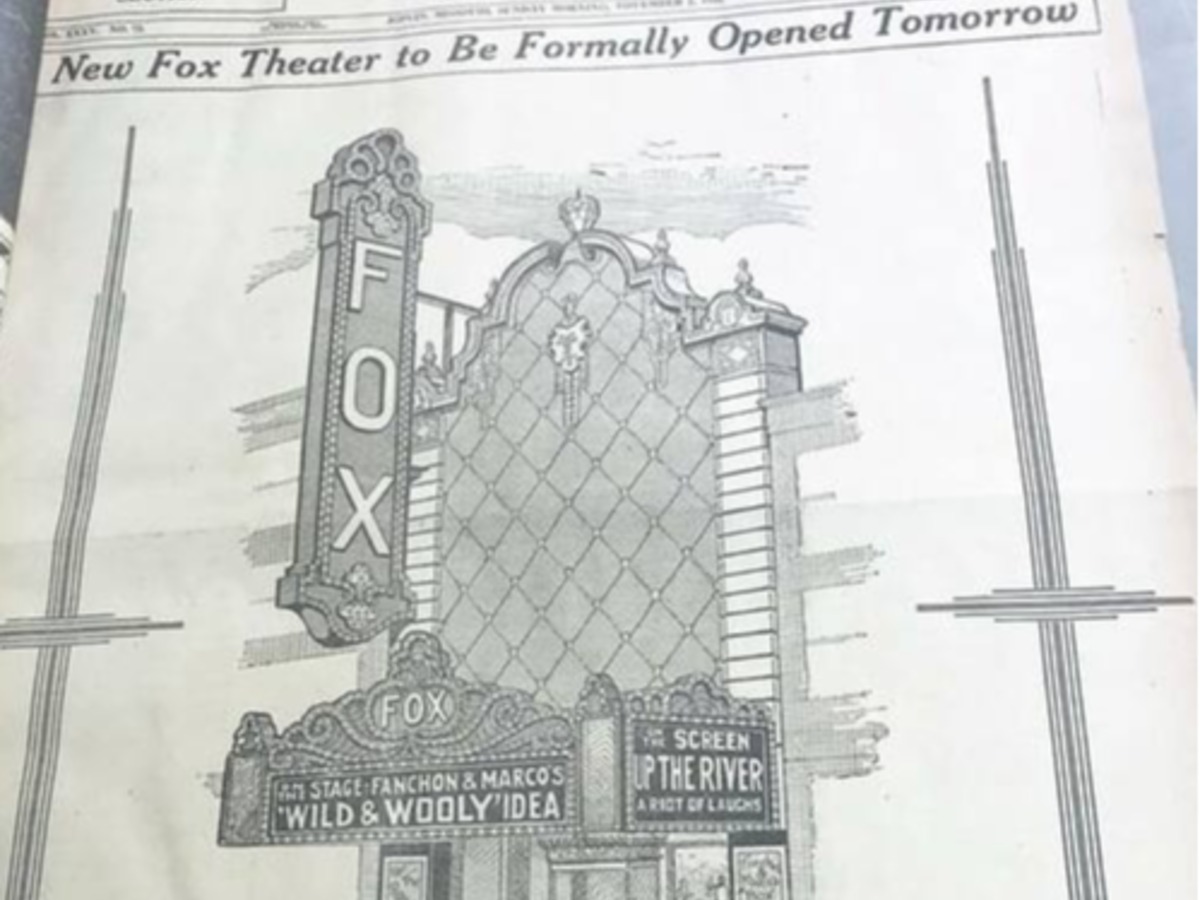
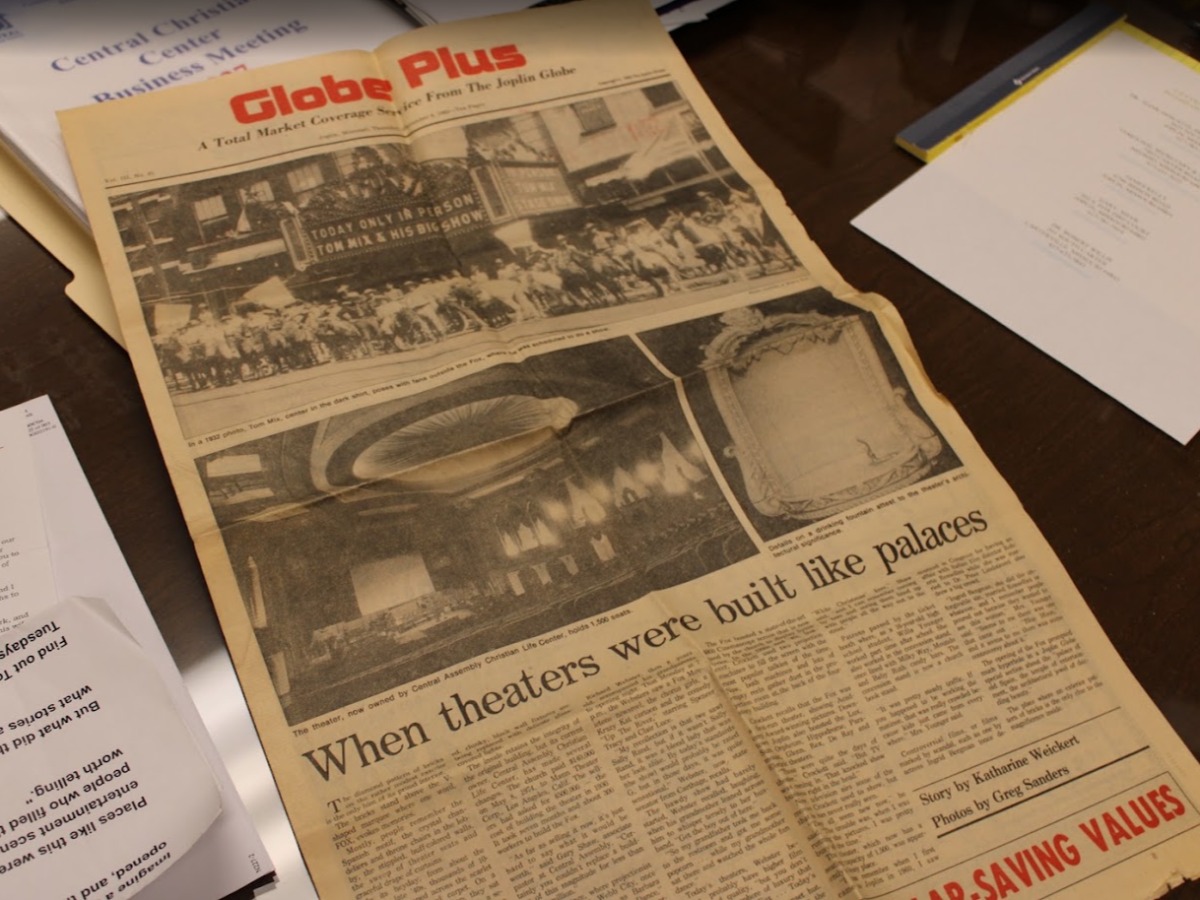
The Fox Theatre officially opened on November 3, 1930.
Its grand opening was a major social event for Joplin, drawing mayors from communities stretching from Springfield, Missouri, to Coffeyville, Kansas.
Local radio station WMBH covered the event with three microphones, and Joplin Mayor Charles A. Patterson welcomed the theater and praised the work behind the project.
The evening began with a live stage production titled Wild and Wooly , featuring tap-dancing cowgirls, cowboy singers and dancers.
After the live performance, guests watched the movie Up the River , starring Spencer Tracy.
Tickets cost 50 cents for an evening showing and 35 cents for an afternoon showing.
According to the historical account in the National Register nomination, the Joplin Globe described visitors as having "gasped in admiration at the splendor of the new edifice."
The newspaper also referred to the building as a "Palace of old Spain," describing it as a temple of entertainment and one of the finest show houses in the Midwest.
The opening night left an impression on people who attended, including some who would remember the experience for the rest of their lives.
Shaw said one of his longtime friends, former state Sen. Dick Webster, attended the Fox's opening night with his grandparents.
Webster remembered sitting in the auditorium when the dancing girls from Wild and Wooly came onto the stage.
According to Shaw, Webster's grandparents were not quite as impressed with the performance. When the dancers began kicking their legs, his grandmother grabbed him by the neck with one hand and his grandfather grabbed him with the other, and they took him out of the theater.
The story is one of the many memories Shaw has heard from people who experienced the Fox during its movie theater years.
An escape during the Great Depression
Throughout the 1930s, the Fox remained Joplin's premier movie palace.
Despite the Great Depression, the theater continued to draw hundreds of patrons each week and remained profitable.
For many people, going to the movies offered a chance to step away from the financial and personal hardships of everyday life.
The theater also offered something that was especially valuable during the period: a climate-controlled place to spend time.
The Fox hosted major motion-picture premieres in Joplin, including Gone with the Wind and The Wizard of Oz .
Its reputation extended beyond city limits, drawing moviegoers from throughout the tri-state region.
At one point, the theater employed approximately 35 people and even featured a full orchestra. The orchestra performed from a pit below the stage, which was later covered over. However, the original stairs leading down to the orchestra pit remain beneath the stage. .
For years, the Fox was more than a place to see a film. It was part of the social life of Joplin, bringing people together for entertainment and giving the city a destination that stood out across the region.
Shaw said he has heard countless stories from people who remember coming to the theater as children.
One of those stories involved actor Dennis Weaver, who later became known for his role on the television series Gunsmoke . He also attended Missouri Southern.
According to Shaw, Weaver used to tell the story of how he and a friend would pool their money to buy one ticket. Once inside, Weaver would wait for the manager to look away, open a fire escape and let his friend in.
The stories are reminders that the Fox was not simply a building where people watched movies. It became part of people's childhoods, family traditions and personal histories.
Segregation and accessibility
While the Fox Theatre represented an impressive period of entertainment and architectural development in Joplin, its history also includes barriers that prevented some members of the community from fully experiencing it.
The National Register nomination documents racial segregation at the theater.
Because the building was constructed without a separate balcony section, Black patrons were not permitted to attend during its earlier years. Local recollections cited in the nomination indicate that the theater did not integrate until the 1960s.
The building also presented accessibility challenges for people with mobility limitations.
The primary entrance was on Main Street and required guests to navigate a series of stairs.
These details are an important part of Fox's story. The theater offered an extraordinary entertainment experience for many residents, but not everyone in Joplin had equal access to it.
The final movie at the Fox
After World War II, the Fox continued operating, but the movie theater industry eventually began to change.
Increased competition and rising operating costs contributed to the theater's eventual closure.
Ownership had also changed over the years. After leasing the building for 13 years, the Fox-Ozark Theatre Corporation purchased it outright in 1943. The company owned the property until 1973, when it was sold to Mann Theatre Corporation.
The sale did not immediately end the theater's moviegoing history.
The Fox continued showing films until Tuesday, May 7, 1974.
Its final movie was The Last Detail , starring Jack Nicholson. The film was shown at 7 p.m. and 8:45 p.m., marking the end of the Fox's run as a movie theater.
After more than four decades of entertaining Joplin residents and visitors, the lights of the Fox went dark for the final time as a movie house.
The building's next chapter, however, was just beginning.
From movie palace to church
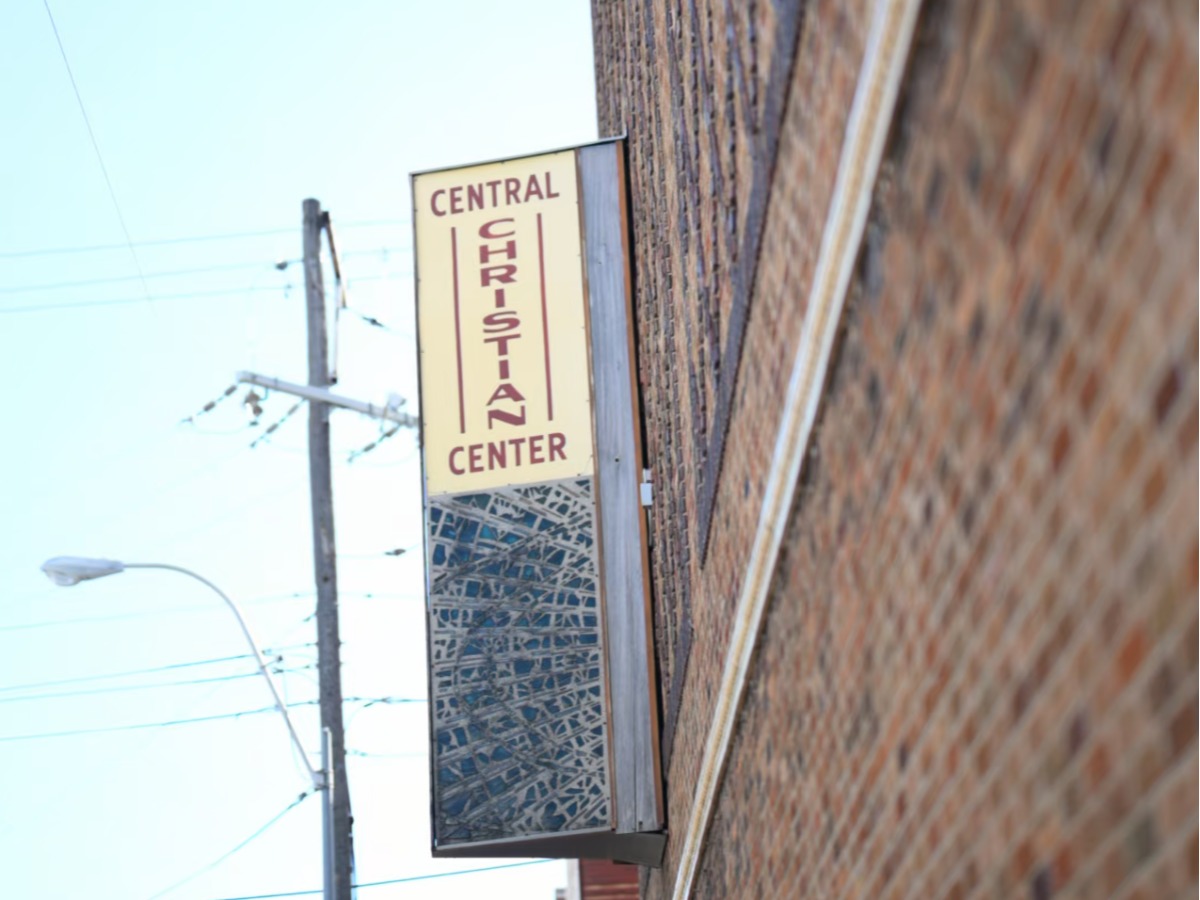
In 1974, Mann Theatre Corporation sold the Fox Theatre to Central Assembly Church of Joplin, now known as Central Christian Center.
The congregation had been looking for a larger space to accommodate its growing membership.
Shaw said the church's transition into the building did not require the kind of transformation people might expect.
"We just pretty well kept it like it was," he said.
In fact, Shaw has a simple way of describing the building's transition.
"It was built to be a church. They just thought it was supposed to be a theater," he said.
Gary Shaw noted that the building has now served as a church longer than it did as a theater, saying, "It's actually been a church four more years than it was a theater."
The congregation originally planned to use the former theater as a temporary home before eventually building a new church. However, those plans never came to fruition, and the former movie palace became the congregation's permanent home.
The transition required some changes, particularly in the stage area, which was remodeled to accommodate worship services.
A new raised platform was installed, along with wooden columns and a large wooden panel featuring stained glass. The original Fox neon sign was already gone by the time the church acquired the property.
However, much of the building's historic character was retained.
The original curtains and seats remain, as does the ticket booth and much of the decorative interior. The church has also made repairs and updates over the years to keep the building usable.
Shaw said the congregation has spent thousands of dollars addressing the challenges that come with maintaining an older building, particularly keeping water out of its flat roofs.
He has also worked to balance the needs of the church with the responsibility of preserving the theater's original features.
"I was on the city council for 24 years. Before that, I was on zoning and planning. Before that, I was on historic preservation," Shaw said. "We've tried to maintain that. So we've tried not to change things."
A building that continues to tell stories
Over the years, Shaw has given countless tours of the former theater.
Some of the most memorable visits have come from people who once sat in the auditorium as children and returned decades later to show someone where they used to sit.
The church has also welcomed school groups through the building.
During National Historic Preservation Month, Shaw said, local schools would bring hundreds of children for field trips. He would take them through the auditorium and explain the history of the theater.
The students often had their own questions, although not always the ones he expected.
The front of the former stage has been remodeled with steps that now serve as the church's altar. Boxes of tissues sit nearby.
After explaining the history of the building, Shaw would open the floor for questions. The children frequently wanted to know what the tissues were for.
Those visits gave younger generations an opportunity to see a piece of Joplin history from the inside.
Shaw said the building has also attracted visitors with personal connections to its architecture.
One couple visiting from California turned out to have a family connection to the original architect. During a tour, Shaw explained the mural and its history before learning that the visitor's grandfather was connected to the artwork's creation.
Shaw later met the man's father as well.
For him, those encounters are another reminder that the building's history reaches beyond the walls of the church.
A new entrance and continued community use
The building has also grown to accommodate the church's needs.
The area that now houses the church's offices and additional facilities was not part of the original theater. Before the expansion, the space held an older building that Shaw described as resembling a Quonset hut.
He said the property had once been used as a laundry for the Keystone Hotel on Main Street.
The church eventually removed the older structure and constructed a new addition. Shaw recalled that the project cost approximately $1.6 million and was paid for in cash.
The addition provided space for offices, nurseries for different age groups and other church operations.
The expansion allowed the congregation to grow while keeping the historic theater space in use.
Beyond worship services, the building has continued to host community events.
Its large auditorium and stage have made it a venue for concerts, including performances connected to Missouri Southern State University and Pro Musica. The building has also hosted graduation ceremonies, fundraisers for Freeman Hospital and the Ronald McDonald House, and other community activities.
The former Fox Theatre continues to serve as a gathering place, even though the events held inside have changed over time.
Recognized for its history
The Fox Theatre was listed on the National Register of Historic Places on July 30, 1990.
The nomination, prepared by Philip Thomason and Teresa Baird of Thomason and Associates, recognized the building for its significance in entertainment and architecture.
The Fox was identified as the most ornate movie palace constructed in Joplin. Its Spanish Revival facade and largely preserved interior were recognized as important examples of the elaborate movie palaces built throughout the country during the 1920s and 1930s.
The nomination also described the building as the only historic theater remaining in downtown Joplin at the time of the city's historical and architectural inventory.
The listing recognized something that goes beyond the building's age. The Fox represents a particular period in American entertainment, when movie palaces were designed to make an ordinary night at the movies feel like a special occasion.
Its architecture, original decorative details, surviving mural and auditorium help preserve that experience for future generations.
Why the Fox Theatre matters to Joplin
The Fox Theatre's history is closely tied to the growth and changing identity of Joplin.
It emerged during a period when moviegoing was becoming one of America's most popular forms of entertainment. Its construction brought hundreds of workers to a major downtown project during the Great Depression, and its opening gave Joplin a venue capable of attracting audiences from across the region.
For decades, it served as a place where residents could watch major films, enjoy live performances and spend time together. It also reflected the inequalities of its era, including segregation and limited accessibility.
When the theater closed in 1974, its story could have ended with the loss of another historic downtown building. Instead, a congregation found a new purpose for the space, allowing much of its original design to survive.
Today, visitors can still see the Spanish Revival details, the grand auditorium, the decorative plasterwork, the original seating and curtains, the ticket booth and The Potter , the mural that remains inside the building.
For Shaw, the building's importance comes down to the responsibility of looking after something that belongs to more than one generation.
He has spent nearly five decades working inside the former theater, watching people return to remember their own experiences and introducing younger visitors to its history.
The Fox is important not simply because it once showed movies, but because it captures several chapters of Joplin's history in one place: the city's growth, its connection to national entertainment trends, the craftsmanship of an earlier era and the ways historic buildings can continue serving a community long after their original purpose changes.
Nearly 100 years after its opening, the building at 415 S. Main St. remains part of downtown Joplin's landscape.
The marquee may be gone, and the final movie may have played decades ago, but the Fox Theatre's history is still very much alive inside its walls.
Historic Tuesdays
This story is part of Historic Tuesdays with Adisyn, a series dedicated to exploring the buildings, landmarks and stories that have shaped Joplin throughout its history.
Every historic building has a story worth telling, and the Fox Theatre is just one piece of the city's rich past. From familiar landmarks to places you may have passed countless times without knowing their history, there's always more to discover.
Thank you for following along and taking this journey through Joplin's history. Keep following along for more Historic Tuesdays as we continue uncovering the stories behind the places that make this community what it is today.
