Nuclear waste documentary 'To Use A Mountain' to be screened Nov. 12-15
Screenings to include discussions with environmental leaders, filmmakers.
What do you think?
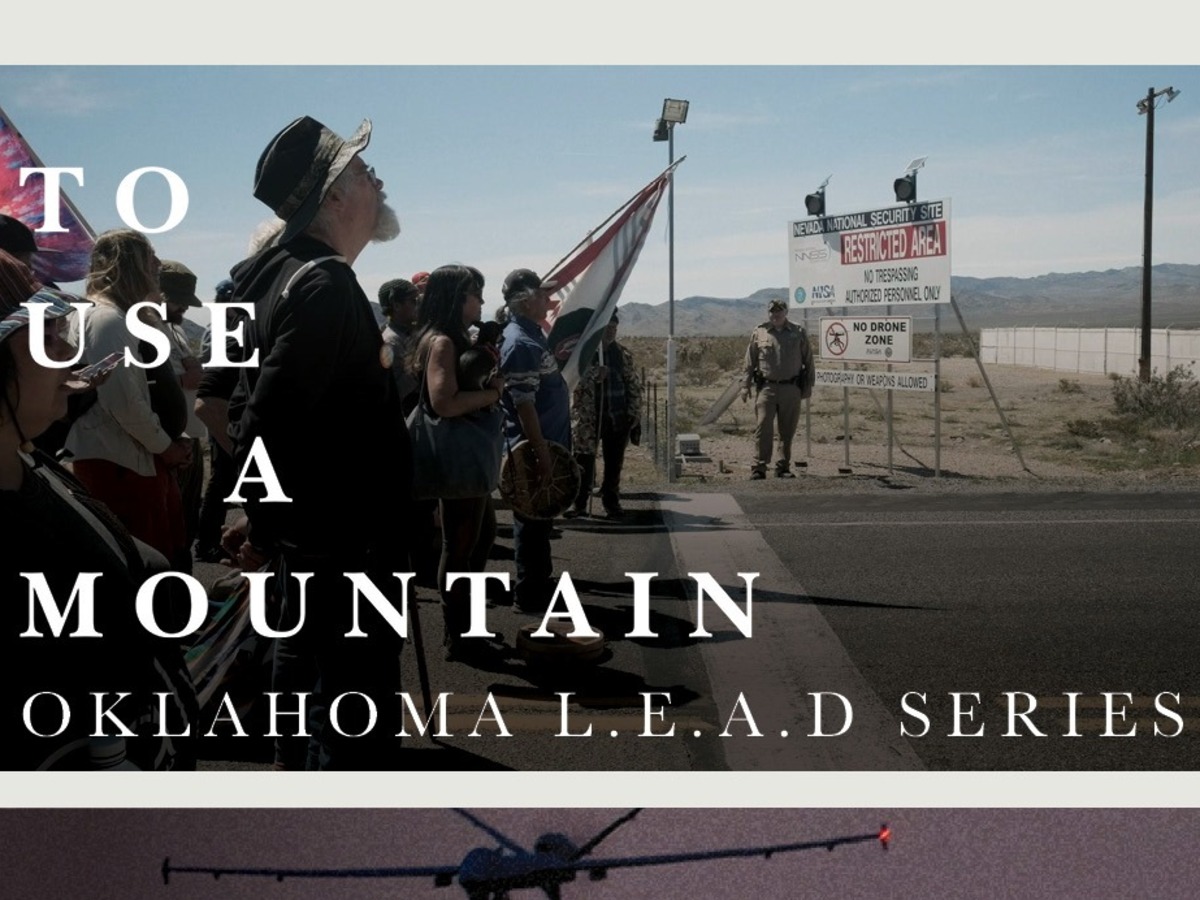
With Oklahoma vying to be American's next Nuclear Lifecycle Innovation Campus, regional environmental groups are hosting a series of community discussions on nuclear waste with statewide screenings of the new award-winning documentary, "To Use A Mountain," from Nov. 12 through 15.
The screenings will be held in several cities throughout Oklahoma including Oklahoma City, Stillwater, Miami and Tulsa. The public is welcome to attend the free events and learn more about nuclear energy and the effects of nuclear waste on communities.
Each screening will be followed by a Q&A session or a panel discussion featuring Director Casey Carter. Each event is donation-based, and no one will be turned away for lack of funds.
RSVP or tickets are not required to attend.
Carter is a filmmaker with a background in physics, photography, and architecture. His work centers on themes of governmentality, geography, environmentalism, and personal subjectivities.
The film series is co-hosted by Local Environmental Action Demanded (LEAD) Agency, Oklahoma Environmental Coalition, Stop Data Colonialism, and Honor the Earth. The event was supported and made possible by Working Films and Anthropocene Alliance.
LEAD Agency, Inc., an environmental justice organization based near the Tar Creek Superfund Site in Miami, was formed in 1997 to raise awareness about the effects of contamination on human health and the environment.
LEAD director Rebecca Jim highlights the need for these discussions right now, saying, "It is important to learn from the past so we can be prepared to fight to protect Oklahoma from new nuclear 'innovations.'"
"To Use a Mountain," directed by Casey Carter, follows six rural American communities that were studied in the 1980s as possible burial sites for the nation's high-level nuclear waste.
Moving through landscapes, archives, testimony, geology, and memory, the film examines how federal nuclear decisions mark real places and the people who live there — and how communities have resisted, organized, and insisted on being heard.
Faced with a mandate to isolate the waste for 10,000 years, the Department of Energy mapped, analyzed, and assembled its assessments, while the unsuspecting stewards of sacrificial territory found themselves fighting for their homes, health, history and dignity.
Carter said the film, "To Use A Mountain," took nearly seven years to make from start to finish.
"Initially, my motivation to make the film was a sense of curiosity, both about the gravity of the topic because it's not like I was setting out to make a film about nuclear energy or nuclear waste," said Carter. "I had this idea to make a film about all six of these places to figure out a way to create a portrait of each one and show the communities and the humanity in these places that were so absent. It was the curiosity of these places and the human story that was absent from this bureaucratic history."
In the end, one site was chosen: a desert ridge in Nevada called Yucca Mountain, on the unceded lands of the Western Shoshone. After decades of controversy, construction at Yucca Mountain was halted, and to this day, no permanent solution has been devised for America's 90,000 tons of high-level nuclear waste.
Against the impassive logic of government analysis and archives, "To Use A Mountain," assembles a people's history of resistance and stewardship through a visceral journey across the landscapes, ecologies, and personal histories of the candidate sites. Farmers, miners, citizen scientists, Native American leaders, and activists—each with a story bound to this enduring threat—stand in stark contrast to the cold, silent machinery of bureaucracy, in a meditation on resistance, memory, and the timeless struggle between power and place.
"The deeper and deeper I got into it, the more I understood about the sprawling impact of the U.S. nuclear history and the extent to which each of these communities faced one violence on another, so many layers of violence but so many inspirational examples of resilience," said Carter. "I felt a responsibility to pursue the film and do justice to all of the people who were so generous with their stories."
President Donald Trump is currently looking at five potential host sites — Utah, Tennessee, Oklahoma, Louisiana, and Idaho — to build Innovative Nuclear Waste Campuses, (NLICs) used to modernize the nation's nuclear fuel cycle and waste management.
The film speaks to enduring questions of environmental justice, American history, and the pressures now facing rural communities as new energy, defense, and data-center infrastructure is advanced in the name of national necessity.
Film Schedule:
Thursday, Nov. 12 - Location: 7pm at Oklahoma Film Exchange, 701 W Sheridan Ave, Oklahoma City, OK 73102
Friday, Nov. 13 - Location: 6pm at Ecobalance Community Park, 1122 S Western Rd. Stillwater, OK 74074
Saturday, Nov. 14 - Location: 5:30 pm at LEAD Agency, 223 A Street, SE, Miami, OK 74354
Sunday, Nov. 15 - Location: 7pm at Drifters Theater, 1305 W Cameron St. Tulsa, OK
Press contact: Kimberly Barker, communications director LEAD Agency, Inc., [email protected] 901-828-7980
