The Joplin Union Depot: A Landmark Still Waiting for Its Next Chapter
Historic Tuesdays with Adisyn
What do you think?
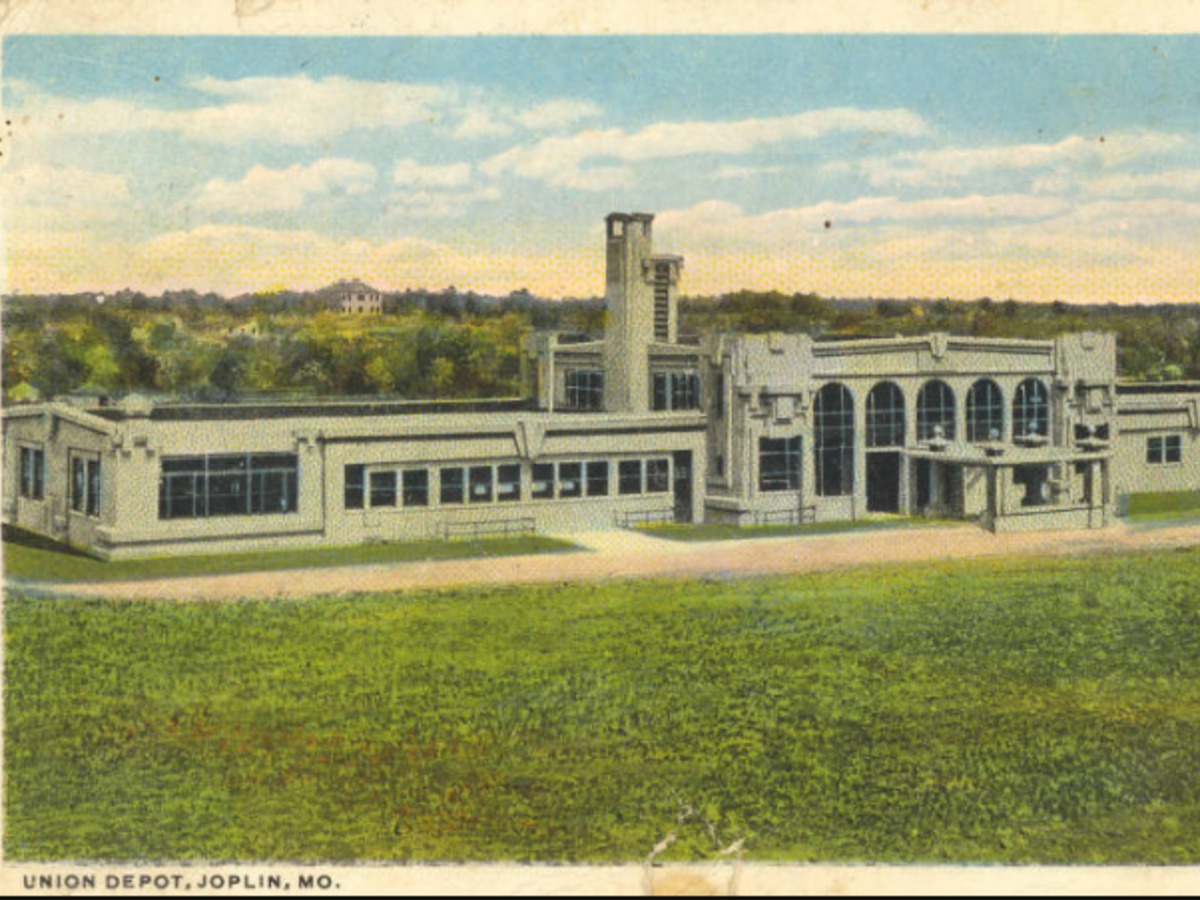
JOPLIN, MO.- For nearly six decades, trains carried people in and out of Joplin through one of the city's most recognizable landmarks: the Union Depot. But the depot's story began long before its first train arrived and it didn't end when the last one left.
Built on a landscape that would be transformed to make way for it, the depot became a center of travel and activity in Joplin. More than a century later, it remains a landmark with a complicated past and an uncertain future.
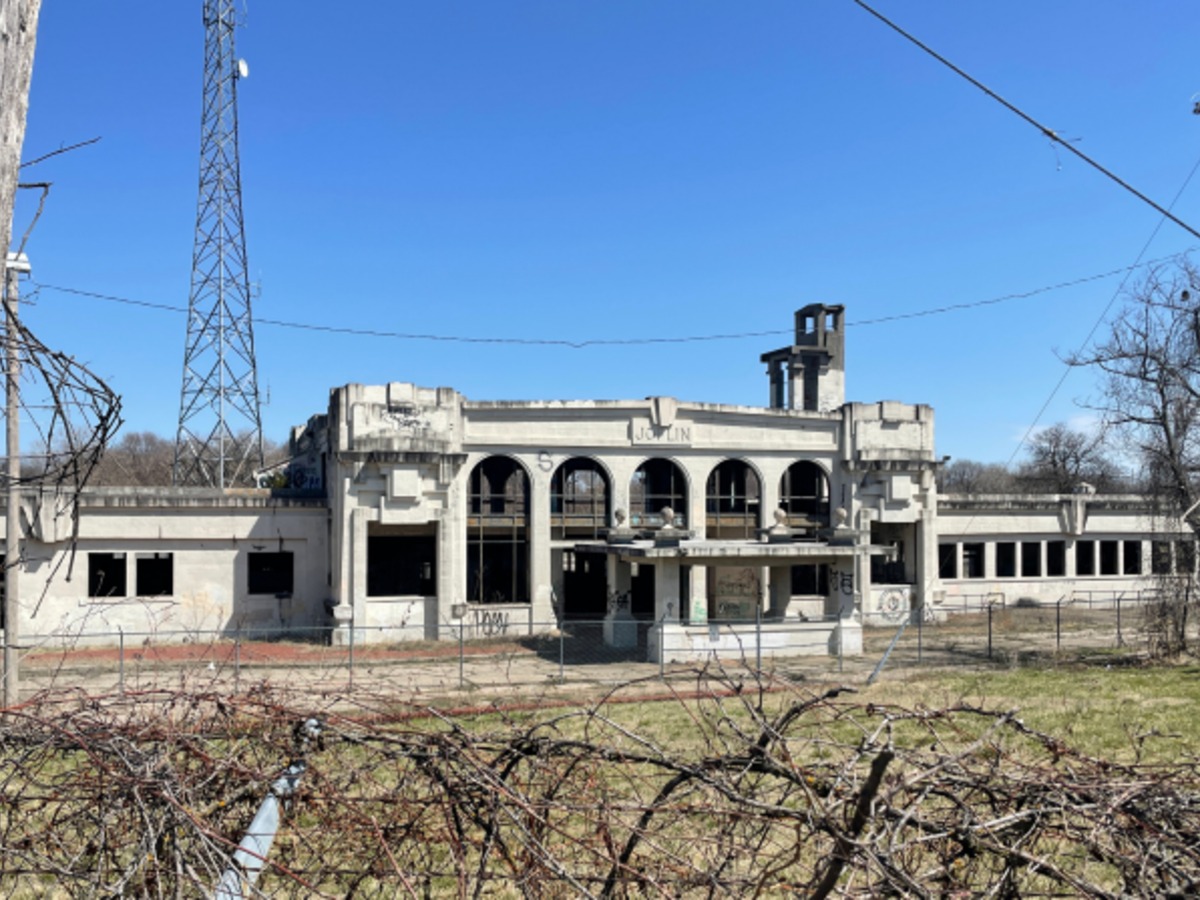
On the northern edge of downtown Joplin, the old Union Depot stands as a reminder of a city that once dreamed big. Its reinforced-concrete walls were built to welcome travelers, connect railroads and help Joplin become a destination in the growing Southwest. But beneath the station's history of progress are stories of a landscape transformed, political arguments that divided the city, a mysterious discovery made during excavation and decades of unanswered questions about what should happen to the building next.
The depot was never simply a place to catch a train. It was a social and commercial center, a place where people arrived, departed, waited, ate, sent messages and prepared for journeys beyond the city. Its construction reshaped the Kansas City Bottoms, changing an area once associated with mining, poor drainage and a notorious red-light district into a major transportation hub.
More than a century later, the depot remains part of Joplin's landscape. It is also part of a story that has yet to reach its ending.
A depot Joplin had to fight for
The story of the Union Depot began long before the building itself rose above the Kansas City Bottoms.
In the early 1900s, Joplin was growing, and its leaders wanted a railroad station that reflected the city's ambitions. The proposed Union Depot would bring several railroads together at one location, giving travelers a central place to arrive and depart. But the project was not immediately welcomed by everyone.
In October 1908, the depot franchise became a contentious issue before the Joplin City Council. The agreement would give the Union Depot Company access to the land and streets needed for the project. Supporters viewed the depot as an investment in Joplin's future. Opponents worried about the amount of land the city would surrender, the railroad company's control over the site and whether the agreement would protect local interests.
The Kansas City Bottoms were not just an empty patch of land waiting for development. They were a strategic route into Joplin and an area whose value was already being debated. Some opponents feared that granting the railroad company control of the site would limit the city's options for future growth.
The city's newspapers reflected the divide. The Joplin News Herald criticized the franchise, while the Joplin Globe championed the project and pushed back against its opponents. Their coverage turned the depot into more than a construction proposal. It became a debate about who would shape Joplin's future: the city, its business interests or the railroad companies bringing new investment.
On October 26, 1908, Mayor Jesse Osborne signed the franchise agreement after the City Council approved it. The decision came after assurances from the Kansas City Southern that it would help provide materials for a viaduct, an improvement that promised to connect parts of the city divided by the Kansas City Bottoms.
The depot project had survived its first major obstacle. But the years between the agreement and construction would bring more delays, more debate and more anticipation.
The station was meant to represent progress. Before it could do that, the city had to decide what it was willing to give up to build it.
The Kansas City Bottoms
Long before the Union Depot became a landmark in downtown Joplin, the land it occupies was known as the Kansas City Bottoms. The area was a far cry from the transportation hub it would eventually become, shaped by mining, poor drainage and a winding creek. Its hills, marshy ground and buildings were home to a community that would eventually be displaced as the depot's construction transformed the landscape.
The area had a complicated history. Mining had left pits and uneven ground. Poor drainage made parts of the land swampy, and Joplin Creek moved through the valley. Hills and low places made the site challenging for development. As mining operations shifted elsewhere, the Bottoms gradually changed. A few factories and mills appeared across the valley and its hillsides, and there was talk that the Kansas City Southern Railway might build its rail shops there. That project never came to fruition.
Instead, the Bottoms developed into a district with a reputation that followed it for years. Gambling houses, saloons, dance halls and rooming houses operated in the area, which came to be known as Joplin's red-light district. As the city grew, some buildings were moved, burned or left to fall into ruin. The land became increasingly neglected and was used as a dumping ground.
The neighborhood's history was also shaped by racial violence and displacement. In the years following the 1901 race riot in Pierce City, some Black residents who had been driven from that community settled in Joplin's Kansas City Bottoms. The area became home to black families as well as people living in poverty, in a district that was often described by outsiders through its reputation for crime and poor conditions.
A lifelong Joplin resident later recalled what the Bottoms had been like in a letter to the Joplin Globe . She remembered that "Where the station is now and scattered throughout the valley were shanties occupied mostly by colored folk." A footbridge crossed Joplin Creek near the future station, and she used it as part of her route to high school.
Her memories also conveyed the dangers residents associated with the area. "A girl or woman did not dare to cross the Bottoms without an escort," she wrote. "It was not even safe for a man." She recalled holdups and occasional murders and noted that the Broadway viaduct had not yet been built. These recollections offer a glimpse into daily life in the Bottoms before the depot reshaped the district.
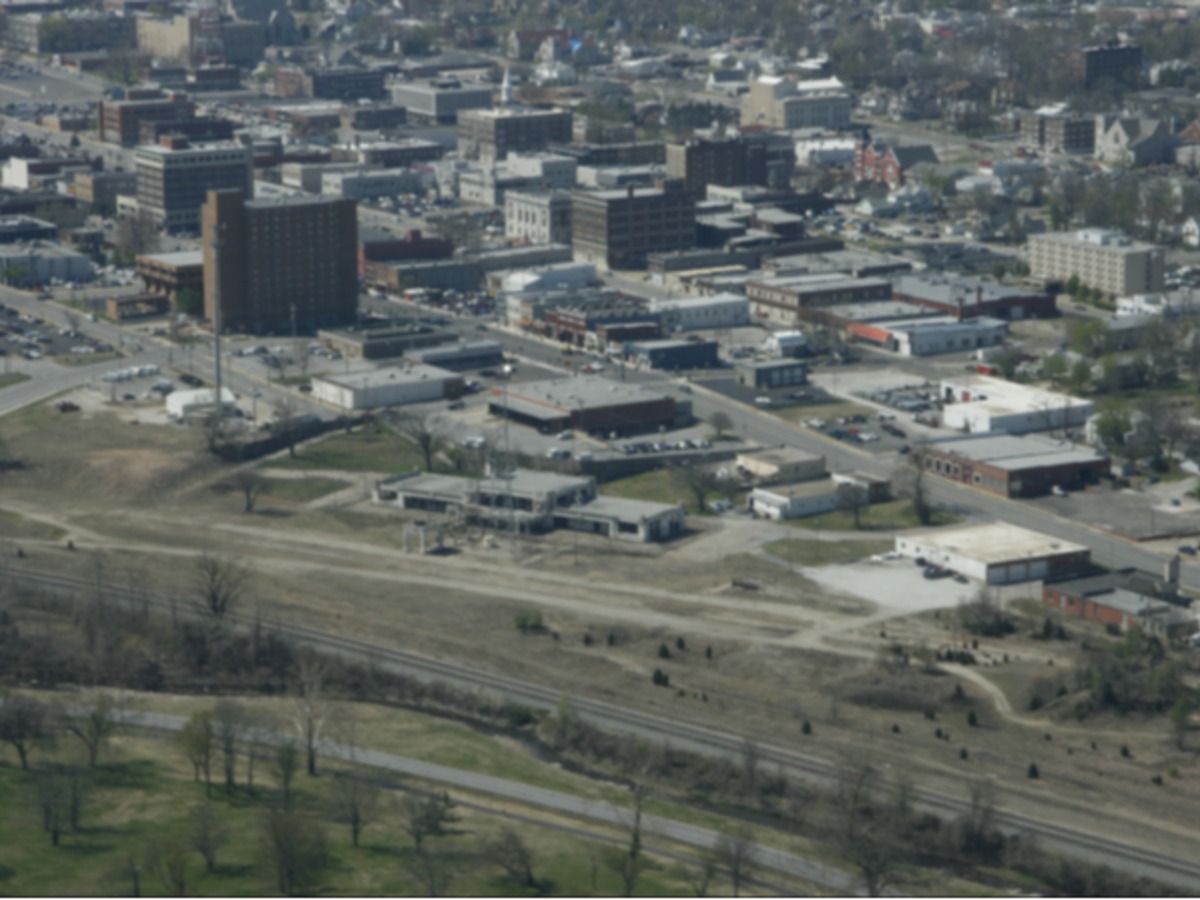
Building the depot meant changing the land itself.
The work required hills to be cut down, low areas to be filled, buildings to be removed and the creek to be redirected. The project was not simply about putting a station on an existing site. It involved reshaping the landscape to make room for rail lines, yards and the depot building.
In 1910, excavation crews began the difficult work of grading the Kansas City Bottoms. The scale of the project was substantial. Reports described tens of thousands of yards of earth being removed and even larger amounts of fill being brought in. Hills along Broadway and Main Street were cut down, while lower areas were raised to meet the railroad grades.
The transformation was visible across the site. Buildings occupied by residents were ordered removed as excavation approached. The old creek bed had to be addressed, and a long culvert was planned to carry Joplin Creek beneath the depot grounds. Other water channels were also redirected through concrete aqueducts.
Newspaper accounts described the project as a dramatic change to a district that had long been considered a problem for the city. One report explained that the station was being built on filled-in ground that had once been "a waste of sluggish waters, dotted with dense growths of willows." The paper noted that the 30 acres taken over by the Union Depot Company had served as the city's dumping ground for years. A polluted stream had crawled through the swamp, but the company changed its course so it would no longer touch the station grounds. The article also reported that "Hundreds of carloads of boulders and dirt have been used as filler," adding that the best tailings for the project came from mines stratified with steel blue flint.
Another, later article praised the results, describing the depot as occupying land that had been "an eyesore to the community for years." The paper said the station and the filling of the old swamp had transformed "a weed-grown bottom land into a beautiful valley, level as the floor of a dance hall." The marshes were filled, Joplin Creek was redirected to flow east of the Kansas City Southern tracks instead of west, and the grounds were expected to be planted with bluegrass, flowers and trees.
The land that had once been marked by mining and poor drainage was being engineered into a transportation center. In the eyes of contemporary newspaper accounts, the transformation was an improvement—turning neglected, waterlogged ground into a landscaped gateway to Joplin.
The change was more than physical. The depot project represented a shift in how Joplin saw the Bottoms—and how the city wanted the rest of the region to see Joplin. But the transformation also came at a human cost: buildings were removed, residents were displaced, and a neighborhood with its own history was reshaped to make way for rail lines and a new station.
The Joplin News Herald captured the scale of the change in a headline describing the depot's construction as a project that would transform the "dreary sweep of land" in the Kansas City Bottoms.
But while the work was creating a new future for the area, it also exposed something unexpected beneath the soil.
A mysterious discovery beneath Broadway
Only a few days after excavation began, workers made a gruesome discovery about three feet into the soil of a hill along Broadway.
The Joplin Daily Globe reported:
"The bones found are crumbled with age, and, although apparently whole when unearthed, fall to pieces when picked up; Their sizes are thought too large for small animals and too small for horses or cows, or other of the larger domestic beasts."
The discovery temporarily brought work to a stop. Residents were questioned about any remembered burials or graveyards in the area. No one recalled any.
One longtime resident, who said he had prospected "All over the Kansas City Bottoms when a young man," had never heard of a burial ground there.
Still, the discovery stirred an unsettling theory.
The old prospector told the Globe :
"They might have been buried all right," said he, "but it was not with the knowledge of the authorities or a permit from the coroner. There was a killing down here almost every day in them times, and I suppose they had to bury the victims some way."
The newspaper speculated that the bones could belong to a murder victim whose death had gone unreported. The Globe suggested that many murders in the Bottoms may never have been reported, and Joplin police called to the scene reportedly shared the suspicion.
But the theory was not accepted by everyone.
The contractors "scoffed" at the idea, possibly fearing that workers would leave the job if they believed they were uncovering human remains. The Globe reported that the men: "showed unmistakable signs of nervousness when the discovery was made…Several declared they would not work if they were convinced they were digging up bones of human beings."
The bones were never confirmed to be human. Their identity remained a mystery, and the excavation continued.
It is a small moment in the depot's history, but one that reveals something about the Kansas City Bottoms before the station was built. The area carried a reputation for violence and disorder, and the discovery quickly became tied to stories of its past.
A station built to impress
As the land was being reshaped, the depot itself began to take form.
Planning for the building had begun around 1907, but construction of the depot structure officially began in 1910.
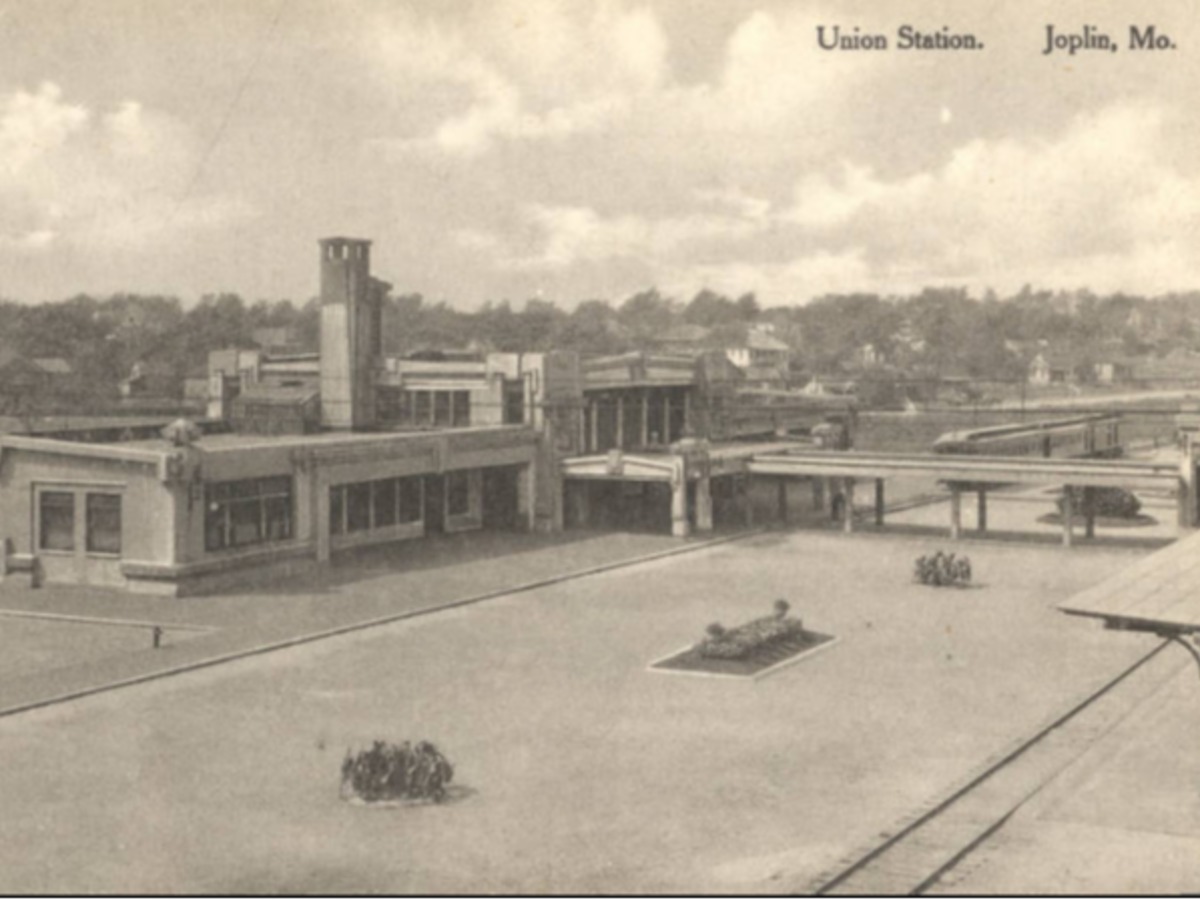
The station was designed by Louis Curtiss, a prominent Kansas City architect known for innovative designs and experimentation with building materials. The Joplin Union Depot incorporated classical and Prairie-style characteristics with bold geometric ornamentation.
Its use of reinforced concrete was unusual for the time. The material helped distinguish the depot from many traditional railroad stations and marked an important point in Curtiss's architectural work. The building was among the early reinforced-concrete structures in Missouri and is one of only about 40 remaining buildings attributed to Curtiss.
Construction moved forward through 1910. The project employed large crews, and the work included both the building and the extensive grading around it. In September, construction briefly stopped when carpenters went on strike over the contractors' failure to hire union hold carriers. The dispute was resolved about a week later after the two sides agreed on which work would be performed by union and non-union workers.
The interruption was short, but it was another reminder that the depot's construction was a major undertaking involving labor, money, engineering and competing interests.
By the end of 1910, the station was taking shape. Its concrete walls, towers and interior spaces were being completed. The building's furnishings were also part of the vision. Dark oak furniture, heavy waiting-room settees and a dining area were planned to give the station a sense of permanence and comfort.
The depot was designed for travelers, but it was also meant to make an impression on anyone who entered.
More than a place to catch a train
For generations of Joplin residents, the Union Depot was more than a place to catch a train. It was a gathering place, a service hub and a reflection of a growing city.
The depot was built to accommodate the many needs of travelers. It included waiting rooms, ticket offices, baggage and express facilities, railroad offices and a dining room. A newsstand gave passengers something to read while they waited. A telegraph office connected people through messages. There was even a barber shop.
The dining room was more than a small counter tucked into a corner. Historical descriptions noted a lunchroom with an elliptical counter that could seat nearly 200 people. The furniture and interior finishes were carefully selected, with dark oak and Mission-style details complementing the building's architecture.
The depot was a place where people could eat, wait, communicate, conduct business and prepare for a journey. It was also where families said goodbye and welcomed loved ones home.
The station's importance reached beyond its daily services. It represented Joplin's connection to the wider world. Trains carried people away from the city and brought others into it. The depot became part of the city's memories: a place where families gathered before departures, where travelers arrived after long journeys and where the city's growth could be seen in the steady movement of people.
During the station's 58 years of service, Joplin residents saw fathers, brothers and sons depart for two world wars. Families waited beneath the depot's awnings, hoping for the return of those they had sent away.
For a city that imagined itself becoming a major center between the Great Plains, the Ozarks and the Southwest, the Union Depot was a proud achievement.
It was a place of movement, but also a place of waiting. And for many people, those moments were just as important as the train itself.
Opening day: A new face for Joplin
The Union Depot opened to the public on June 30, 1911. Its completion was celebrated as a major achievement for the city and the railroads that had invested in it.
The opening marked the culmination of years of debate, planning and construction. The depot brought several railroads together and gave Joplin a station that could serve its growing population and ambitions.
The building's reinforced-concrete construction and distinctive design helped set it apart. Its architectural details and interior facilities were intended to make the station both practical and impressive.
The celebration surrounding the depot reflected the pride Joplin felt in the project. City officials and railroad representatives gathered to mark the occasion. The station was described as a monument to progress and an example of what could be accomplished by transforming a difficult piece of land into a useful public space.
Mayor Jesse Osborne praised the depot as a "beautiful structure" and a symbol of the city's progress. The station was more than a new building. It was a visible sign that Joplin was growing and investing in its future.
For the city, the depot was a new gateway. For travelers, it was a place to begin or end a journey. For the Kansas City Bottoms, it marked a dramatic new chapter.
The last train
The Union Depot served Joplin for 58 years.
But as the decades passed, the role of rail travel changed. Automobiles became more common, and the number of people traveling by train declined. The station that once stood at the center of Joplin's transportation network gradually lost its purpose.
On November 3, 1969, the Kansas City Southern's Southern Belle departed the depot as the last train to leave the station, ending 58 years of service.
The departure marked the end of an era. The building had welcomed generations of travelers, but it was no longer needed for the role it had been built to fulfill.
After the trains stopped, the depot entered a new chapter—one defined not by arrivals and departures, but by attempts to find another purpose for the building.
A landmark waiting for its next chapter
The depot's story did not end when the last train departed.
Over the years, the building was considered for different uses. Proposals included turning it into a home for the Joplin Museum Complex and incorporating it into broader downtown redevelopment plans. Some ideas moved into public discussion, but none resulted in a completed restoration.
In 1973, the Union Depot was listed on the National Register of Historic Places, recognizing its significance as a historic building and an important example of Louis Curtiss's work.
In 1989, the Missouri Department of Natural Resources provided a $175,000 rehabilitation loan. But the rehabilitation effort became entangled in contractor disputes and loan problems. The state eventually foreclosed, and in 1998, the Missouri Department of Natural Resources' State Historic Preservation Office took ownership of the property.
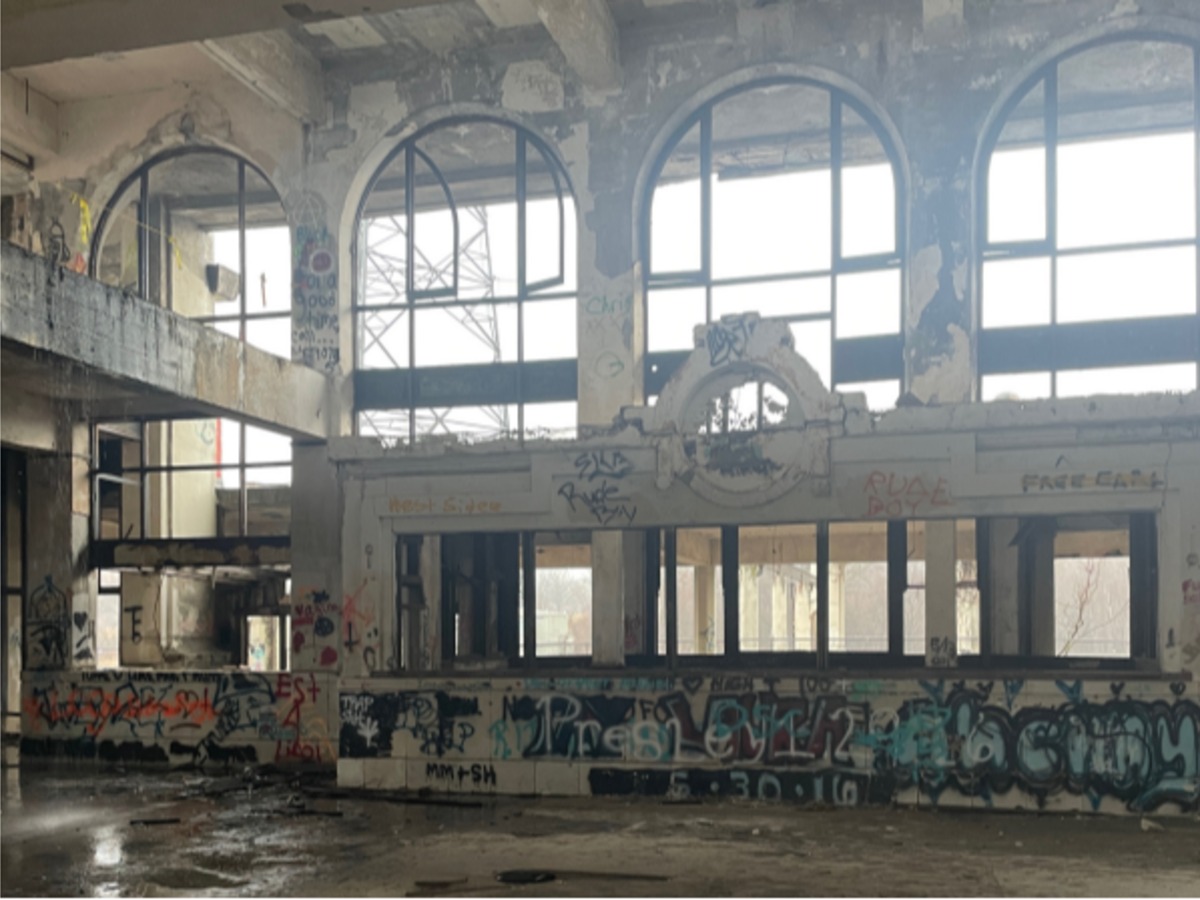
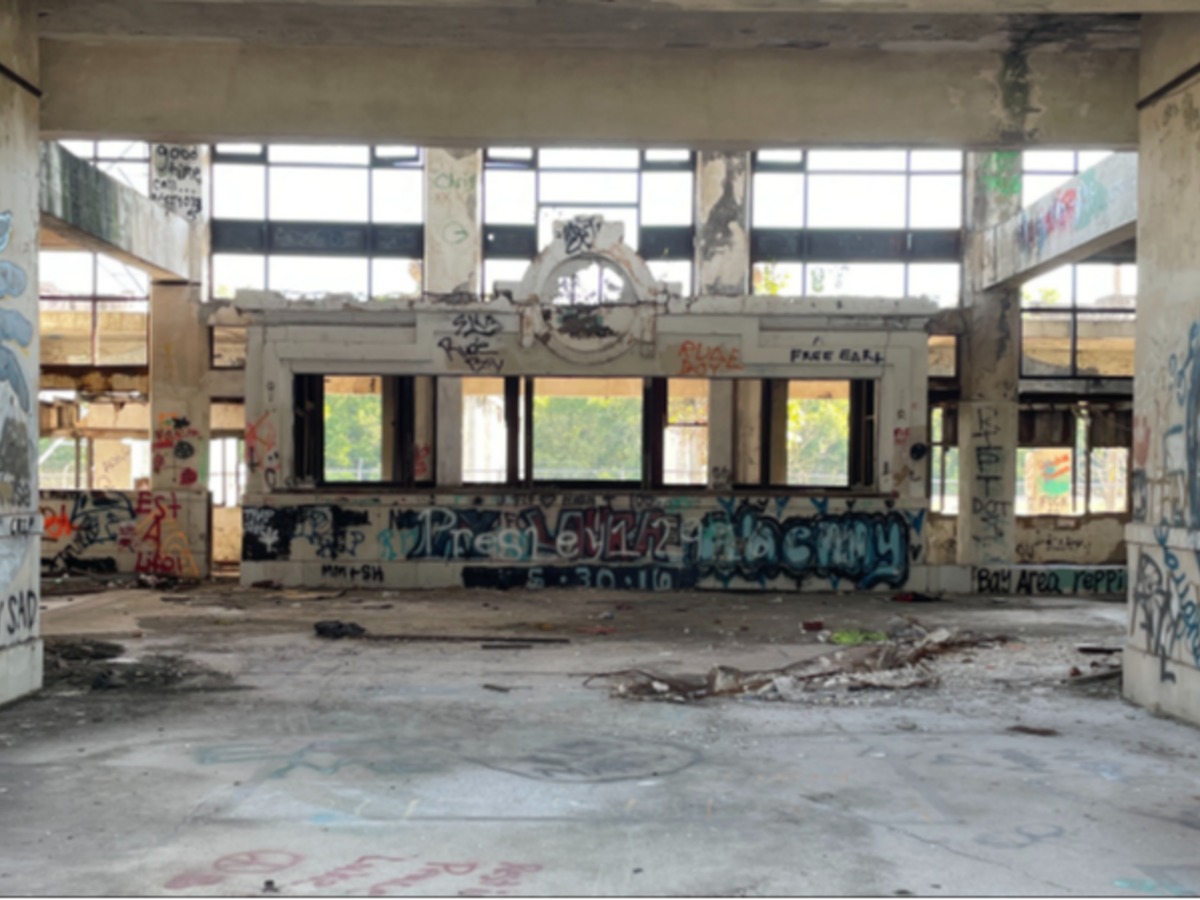
The depot has since remained a challenge for preservation advocates and city leaders. The building's size, unusual layout and need for substantial rehabilitation have made it difficult to fit into a familiar downtown redevelopment model.
It is not a simple conversion into retail space with apartments above. Its structure and history require a more considered approach.
The building has also faced years of vacancy, neglect and deterioration. For people who remember the depot's former role, its empty condition can feel like a loss. For those who see it as a historic landmark, it remains a possibility waiting to be realized.
The question has been less about whether the depot matters and more about what kind of new use could make it viable.
Imagining a new future
During the winter of 2023, four faculty members and eight students from South Dakota State University's School of Design worked with community members to imagine a new purpose for the historic Union Depot and its surrounding property.
The project, known as Joplin Union Depot Visioning , was supported by a grant through the Environmental Protection Agency's Technical Assistance to Brownfields program, coordinated through Kansas State University.
Dr. Sabine Martin worked with Lori Haun, executive director of Downtown Joplin Alliance, Joplin Mayor Doug Lawson and city staff to coordinate the project. The South Dakota State University team developed a site inventory and conceptual images showing possible ways the depot and its surrounding land could be reused.
The ideas were based on community input. The project was intended to help residents, city leaders and potential developers see what the property might become—not to establish a final redevelopment plan.
The city's application for technical assistance acknowledged the difficulty of the task. It noted that "several attempts have been made to re-purpose and rehab the facility, (but) nothing has come to fruition."
The application also described the community's feelings toward the building: "The community generally loves the building and understands its value, but after years of vacancy and multiple failed starts, the Depot has started to feel hopeless to the community."
That sense of frustration is understandable. The depot is a historic landmark, but preservation requires more than admiration. It needs a financially viable use, a developer willing to take on the building and a plan that respects the structure's historic features.
Downtown Joplin Alliance has partnered with the Missouri Department of Natural Resources and a local commercial real estate firm to market the property and prepare a detailed package for potential developers. The goal is to help interested parties understand both the building's potential and the community's hopes for it.
The visioning application noted that the depot's unusual character may require a different approach from other downtown projects. It also raised the possibility of including adjacent land in a larger development. The application described roughly 12 acres that could potentially be purchased and incorporated into a project that might include townhouses, apartments or a hotel.
Those ideas remain possibilities, not an announced development. The depot has not been purchased, and no redevelopment has taken place.
But the visioning project offers a way to look beyond the building's vacancy. It invites the community to consider what it could mean for Joplin if the depot once again became an active place.
The depot once offered a dining room, waiting rooms, a barber shop, a telegraph office and a gathering place for people moving through the city. Its next chapter may look very different, but the broader question remains familiar: How can this building serve the people of Joplin?
A timeline of the Joplin Union Depot
1908 — The franchise debate
The proposed Union Depot franchise sparks a contentious debate in the Joplin City Council and local newspapers. Supporters see the depot as a sign of progress; opponents question the city's concessions and the railroad company's control of the site.
October 26, 1908 — The franchise is approved Mayor Jesse Osborne signs the franchise agreement after City Council approval, moving the project forward.
1910 — Excavation begins
Work begins to reshape the Kansas City Bottoms. Hills are cut down, low areas filled, buildings removed and Joplin Creek redirected. During excavation, workers discover old bones beneath a hill along Broadway. Their identity is never confirmed.
1910 — Depot building construction begins The station itself begins to rise under the design of Kansas City architect Louis Curtiss. The reinforced-concrete building incorporates classical and Prairie-style characteristics with geometric ornamentation.
September 1910 — A labor dispute pauses construction Carpenters strike over the hiring of union hod carriers. The dispute is resolved about a week later, and construction resumes.
June 30, 1911 — The depot opens
The Union Depot opens to the public, serving multiple railroads and providing a central transportation and community hub for Joplin.
November 3, 1969 — The last train departs The Kansas City Southern's Southern Belle leaves the station, ending 58 years of train service.
1973 — National Register listing
The Union Depot is listed on the National Register of Historic Places.
1989 — Rehabilitation loan
The Missouri Department of Natural Resources provides a $175,000 loan toward rehabilitation of the depot. Problems with the rehabilitation contract and loan follow. The project does not resolve as planned.
1998 — State ownership
After the rehabilitation effort falters and foreclosure occurs, the Missouri Department of Natural Resources' State Historic Preservation Office takes ownership.
2010 — A new redevelopment proposal
Renewed discussions consider incorporating the depot into a North Main Street development, potentially including the Joplin Museum Complex. The proposal does not move forward.
2011 — The tornado changes priorities
The Joplin tornado brings new priorities for the city, further delaying redevelopment discussions.
2020 — A new preservation initiative
Downtown Joplin Alliance launches its Endangered Properties Program to help historic buildings find new uses.
2021 — Named a "Place in Peril"
Missouri Preservation names the depot a "Place in Peril," highlighting the need for preservation and a new use.
2022 — A partnership to explore the depot's future Downtown Joplin Alliance partners with the Missouri Department of Natural Resources to study the depot and explore marketing it to potential developers.
Winter 2023 — Visioning project
South Dakota State University's School of Design collaborates with Joplin community members to develop conceptual ideas for the depot's future reuse.
Today — The depot remains unsold
The building has not been purchased, and no redevelopment has taken place. City and preservation partners continue to explore ways to find a viable new purpose for the historic landmark.
The mystery remains
The Union Depot's history is full of questions.
Who were the people who passed through its doors? What did they carry with them as they left Joplin? Who waited beneath the awnings for someone to return? What did the workers think when they uncovered those crumbling bones beneath Broadway—and what might the Kansas City Bottoms have held before the depot changed the landscape?
Some of those questions may never be answered. The stories of countless travelers and residents were never recorded. The bones discovered during excavation were never identified. And the depot's future remains uncertain.
But the building still stands as a reminder of the city that built it.
The Union Depot was once a symbol of Joplin's ambition. It transformed a difficult landscape, connected the city to the wider world and served as a gathering place for generations. Today, its future depends on whether a new purpose can be found—one that respects its history while making it useful again.
For Joplin, the depot is more than an abandoned station. It is a place where the city's past, its mysteries and its hopes for the future meet.
The last train may have left in 1969. But the story of the Joplin Union Depot is still moving.