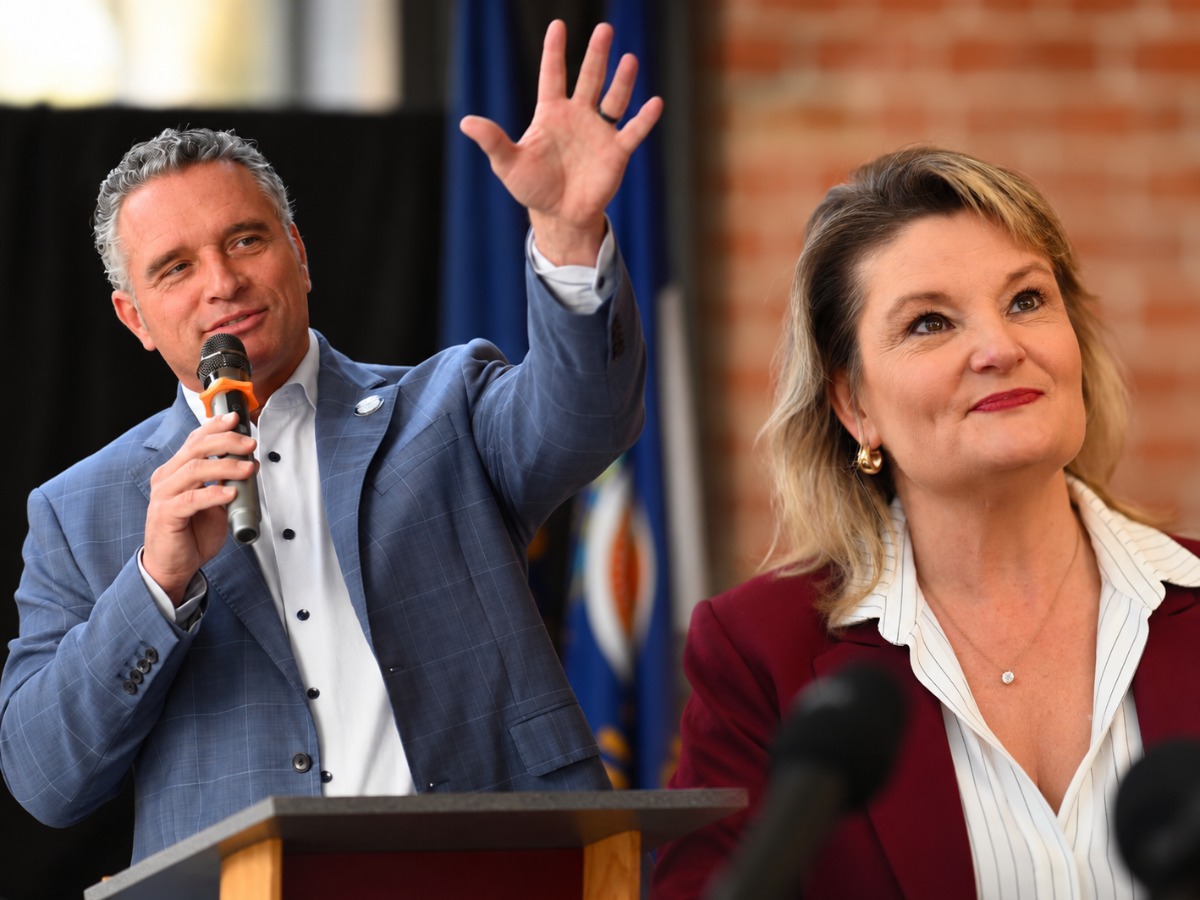
Kansas governor candidates bring competing visions to Baxter Springs as midterms approach
What do you think?
With less than two weeks until the midterm elections, Kansas' top gubernatorial candidates made a stop in Baxter Springs.
The two outlined competing visions for the state's future while addressing concerns over property taxes, education, and economic development.
Republican Senate President Ty Masterson and Democratic state Senator Cindy Holscher spoke to voters during an event organized by the Baxter Springs Chamber of Commerce.
Both candidates identified affordability as a major challenge, but offered differing approaches to addressing rising costs and criticized each other's legislative records.
Holscher accused Masterson and the Republican-controlled Legislature of failing to provide meaningful property tax relief despite holding a legislative supermajority.
"My opponent has been Senate president for six years with a number of allies in his own party," Holscher said in an interview following the event. "They've had a supermajority. They can pass anything they want but haven't addressed those issues."
Masterson pushed back against those criticisms, pointing to tax legislation approved by the Kansas Senate and the state's elimination of income taxes on Social Security benefits and the state sales tax on groceries.
He acknowledged that property taxes remain a serious concern, particularly for homeowners living on fixed incomes.
"We are literally at the point we're taxing fixed-income people out of their homes," Masterson told the crowd.
They also clashed over education policy.
Holscher pledged to fully fund public schools, including special education, while opposing school choice programs that she argues divert taxpayer money away from traditional public education.
Masterson defended school choice and called for greater accountability in the classroom, particularly when it comes to reading proficiency. He pointed to literacy reforms in Mississippi as a potential model for Kansas.
Holscher also criticized Masterson's support for policies associated with former Republican Gov. Sam Brownback, arguing that the state's previous tax-cutting approach damaged education funding and infrastructure.
In an interview following the event, Holscher praised outgoing Democratic Gov. Laura Kelly's leadership but identified an area where she would place greater emphasis if elected.
"We've done a lot in terms of economic development, and we need to keep bringing in those big companies," Holscher said. "But I want to put more focus on those small businesses, the mom-and-pop shops that help our downtown, these small communities."
Masterson emphasized his support for oil and natural gas production, ethanol and agriculture. He also argued that a stronger working relationship with President Donald Trump's administration would help Kansas attract investment and create jobs.
For some voters attending Wednesday's event, however, neither candidate provided all the answers they were looking for.
Loren H., a Galena resident who attended the event, said he remains undecided after hearing both candidates.
"Neither one of them really sold me 100% on the future for Kansas," he said.
Loren said Kansas needs to modernize its economy and explore additional revenue sources, including marijuana legalization, to help reduce the financial burden on property owners.
"We got to quit burdening everybody with property taxes," he said. "I go to the county commission meetings every week, and the poor guys are trying to figure out a way to keep the roads paved without raising taxes."
He expressed doubts about Masterson's approach to economic development but stopped short of endorsing Holscher.
Loren also pointed to proposed solar development in Cherokee County as an opportunity to generate additional tax revenue without placing the entire burden on local homeowners.
He said Kansas should be more willing to consider new industries while establishing regulations to protect local communities.
"We need to be pulling in there again, set the right rules, put the right regulations on it, but let's keep that revenue in town," he said.
Economic development and keeping young people in Kansas were also recurring themes during the candidates' appearances.
Holscher said rural communities deserve greater attention and expressed concern about Kansas students leaving the state for college and never returning.
"My heart is in rural Kansas because I grew up on a farm," Holscher said.
Masterson made a similar argument about the need for more jobs and economic opportunities to keep younger generations in Kansas.
"We've been exporting our children. We need to export our products and our services," Masterson said.
The two also differed over energy policy and the state's relationship with Washington.
Holscher said Kansas needs a governor willing to challenge federal policies that hurt farmers, including tariffs and decisions involving beef imports. She also called for a balanced approach to renewable and traditional energy sources.
Masterson promised strong support for fossil fuels and ethanol production, arguing that lower energy costs would help reduce prices throughout the economy.
Holscher also outlined plans to expand Medicaid, raise the minimum wage, legalize marijuana and pause new data center development until stronger protections are established.
The election to replace term-limited Gov. Laura Kelly is November 3.