Cortez joins KZRG to talk annexation and rezoning votes
What do you think?
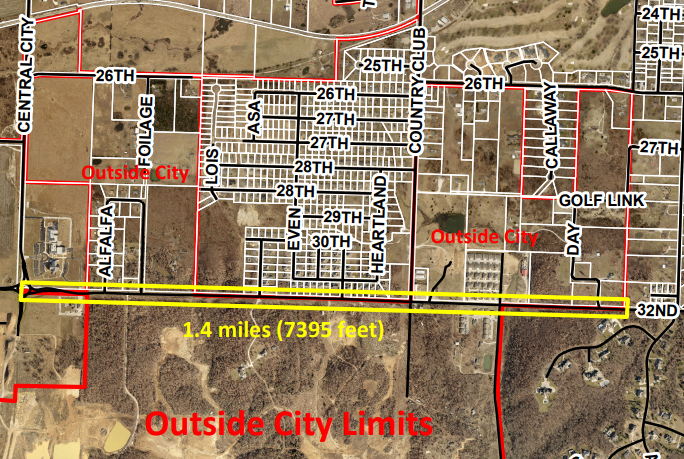
Last Tuesday, the Joplin City Council voted 6-3 to annex land from the old Wildwood Ranch and followed that vote up with a 7-2 decision to rezone it to heavy industrial.
That wasn’t unusual. What was unusual was the amount of people who showed up.
“I've talked to people that said they spent two and a half, three hours in just the stairwells trying to get to the chamber so they could hear what's going on,” Joplin Mayor Keenan Cortez said. “They never heard anything that was going on and decided that wasn't the best way to spend their evening, so they ended up leaving. But we had tons and tons of people come to Joplin City Hall to the point where our fire department was getting a little concerned should there be an emergency that happened.”
Of course, there was a reason for the turnout, as people of Joplin wanted their voices heard on the potential future of the land—an AI data center. Passions were high, and at times, the crowd got out of hand.
“There are a lot of emotions with this potential development,” Cortez said. “I get all that, understand it 100 percent. But I also do believe that we can get through things like this civilly and we can talk like adults and try to get the facts out, even our viewpoints out and not have to beat each other over the head with a ball bat.”
“And there's a second reading and third reading coming up in February … So, it's not over yet. I imagine we're still going to hear a lot from the community about their either support and, or not support of this incident. But it is capturing a lot of the attention of a lot of citizens.”
The concerns from the community are well founded. All across the country, Missourians can read and hear about horror stories of data centers causing communities’ water and electric bills in other states to skyrocket.
“If you're concerned about your electric bill going up because you're going to have a large electric puller coming into your community, those are concerns that most normal people would have,” Cortez said. “The water and how much water is this going to take? Is it going to damage our aquifer? Is it going to cause us to maybe put some polluted water out into the environment? Those are concerns that normal people have and are not things that should be just shoved under the rug and not considered. However, information that I've been given and information that has yet to come out, there's some things that we don't know yet.”
There has been talk of rezoning that land for months, even years. Whether or not a data center will be built depends largely on the studies that are to be done to determine if construction for a data center is feasible.
“There's 12 (studies) that need to be completed before any dirt could be turned and any wall could be erected,” Cortez said. “If those studies come back and say this isn't feasible for this piece of property in this location at this time, it's not going to work, it's going to be too much damage to the environment, it's going to require too much of this or too much of that—nothing's going to get built. But we've got to get those studies done before. And, and because those studies aren't done doesn't mean the landowner can't ask for an annexation and a rezoning. It's just one of those things that has to happen along the way.”
Of course, none of this is at the cost of the taxpayer.
“The private landowner is paying for all of this, as well as the proposed data center that is potentially coming into that site,” Cortez said. “(They) said, ‘We're going to take on all expenses and make this project happen.’ If it's going to happen, they're paying for nothing. The Joplin citizen taxpayer isn't going to be out of dime on this.”