Auditor Fitzpatrick releases new report detailing how continued deficit spending will jeopardize the state's financial health
What do you think?
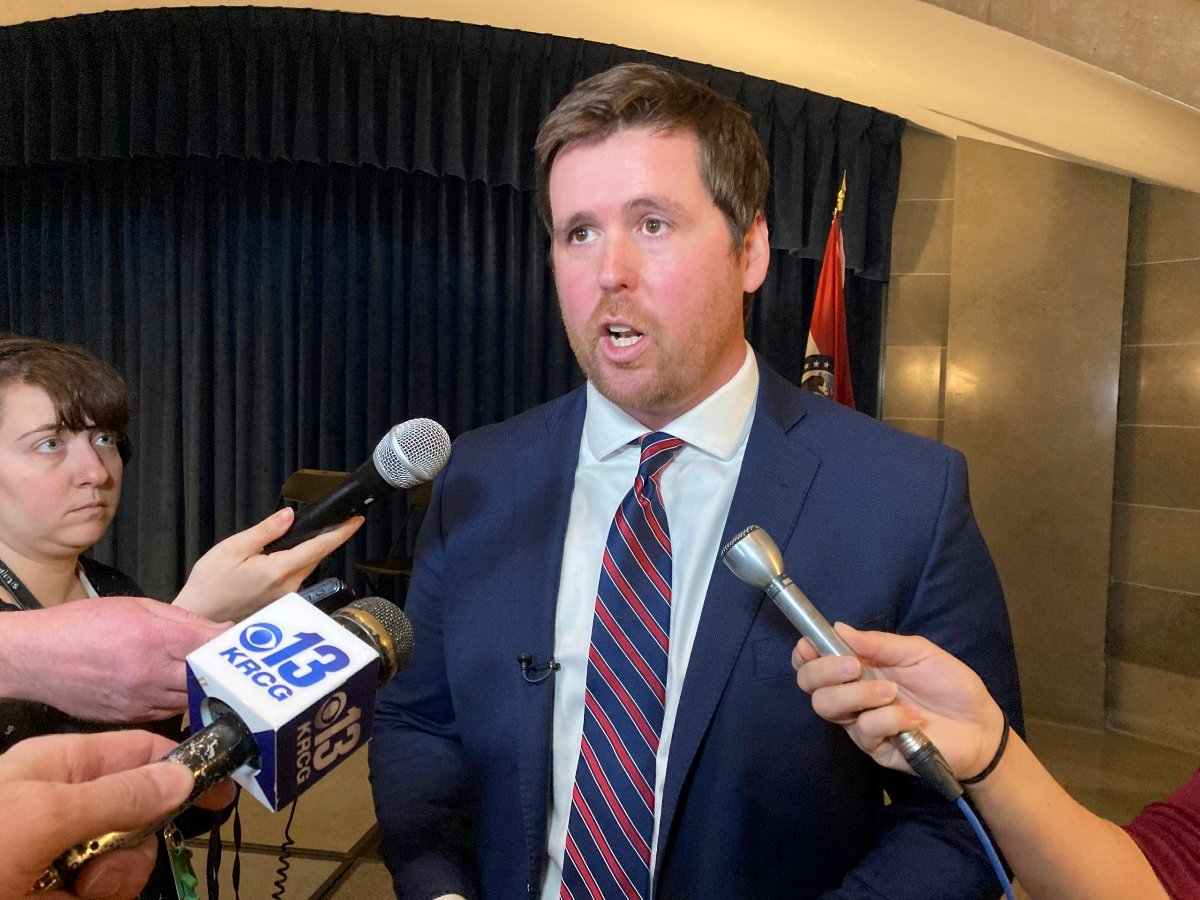
JEFFERSON CITY, Mo. — As lawmakers prepare to return to Jefferson City for the 2026 legislative session, Missouri State Auditor Scott Fitzpatrick is urging them to take immediate action to curb the trend of deficit spending before the state's General Revenue Fund is drained to critically low levels and drastic, emergency budget cuts become necessary.
Fitzpatrick released a new report of the state's spending trends that shows Missouri's General Revenue Fund balance, which had climbed to nearly $6 billion at the end of Fiscal Year 2023, has been rapidly depleted by deficit spending over the last two years which, if continued, will fully consume the fund's balance by Fiscal Year 2028 based on the current Consensus Revenue Estimate (CRE) projections, or by Fiscal Year 2027 based on recession level projections.
"Missouri has experienced an unprecedented run of strong revenue growth to the point that the last difficult budget year is a distant memory. Many current legislators have only been in office during these last few years during which strong economic growth and a huge influx of federal money have made hard budget decisions unnecessary, but they're about to face the challenge of crafting a budget in the face of slowing revenue growth and reduced federal funding. I applaud lawmakers for making decisions that caused the General Revenue Fund balance to soar to unprecedented levels, but state spending has also increased to an unsustainable level that will rapidly deplete the balance in the fund very soon if it is not brought under control," said Auditor Fitzpatrick.
Fitzpatrick's report documents the unsustainable explosion of state spending over the last five years, which is due in large part to the significant amount of COVID funds that flowed into Missouri from the federal government, as well as increased tax collections resulting from strong economic growth. The state saw annual revenue increase 45.8 percent from fiscal years (FY) 2020 to FY 2025. However, this period of time also saw state expenditures increase by roughly 53.4 percent, which is more than twice the rate of the Consumer Price Index (CPI) increase over the same time period (24.5 percent).
The report notes even with the increase in expenditures, budget makers were able to bring the year-end General Revenue Fund balance to unprecedented levels with a highwater mark of $5.8 billion in FY 2023. However, FYs 2024 and 2025 saw significant deficit spending of close to $960 million and $480 million, respectively, resulting in a FY 2025 year-end balance of approximately $4.3 billion.
The report notes the state will deplete the General Revenue Fund balance in FY 2028 if FY 2026 expenditures remain unchanged and revenues grow at the rate of the latest CRE. Assuming (1) the FY 2026 and FY 2027 CRE agreed to by the Governor and the General Assembly is realized, (2) the average change in net General Revenue Fund collections (3.65%) is realized for FY 2028, and (3) the FY 2026 estimated expenditures remain constant for FY 2027 and FY 2028, the report projects deficit spending of over $2 billion, $1.5 billion and $1 billion for FY 2026, FY 2027 and FY 2028, respectively.
The report also projects an even more concerning condition for Missouri's General Revenue Fund if the economy enters a recessionary period by applying the worst 3 consecutive years of change in actual annual net collections from FY 2003 to FY 2025, which would essentially represent a recessionary period, to FY 2026 through FY 2028. Under these conditions, Missouri would run out of General Revenue in FY 2027, at which point the deficit would be over $3.8 billion.
Fitzpatrick said, "The time is now to make the tough decisions that will prevent drastic, emergency budget cuts from being necessary in the months and years ahead. The longer Missouri waits to take action, the harder this exercise will become. Economic trends are unpredictable and we need to make sure Missouri is ready to face any challenge. I have the utmost confidence in the ability of Governor Kehoe and the budget leaders in the House and Senate to work together to craft a budget that will protect and preserve Missouri's financial health."
The report also points out recent changes in tax law, including the increases in the standard deduction contained in the "One Big Beautiful Bill" (OBBB) Act, and the elimination of the state tax on capital gains, will put downward pressure on revenue to the General Revenue Fund in the near term. The projected impact of such legislation is reflected in the latest CRE, and is therefore included in the projections contained in the report. However, these projections do not include, or assume, any future changes in federal or state tax law.
The complete report on Missouri's General Revenue Fund financial condition is available here.