



Senate rejects extension of Obamacare subsidies as costs are set to rise for millions
Missouri's Josh Hawley was one of four GOP members to join Democrats in voting yes
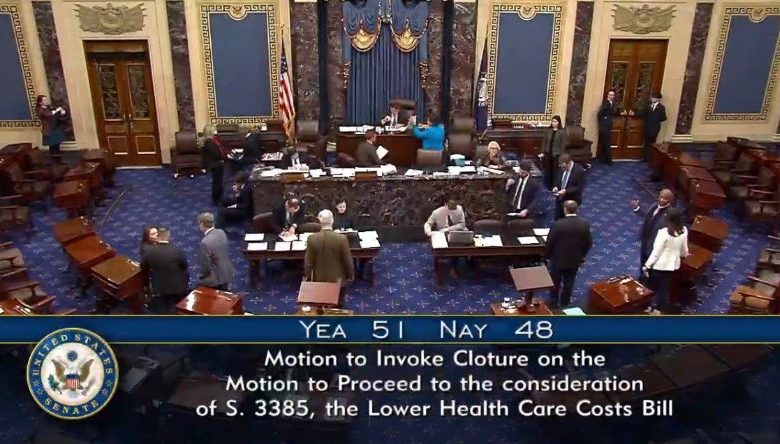
WASHINGTON (AP) — The Senate on Thursday rejected legislation to extend Affordable Care Act tax credits, essentially guaranteeing that millions of Americans will see a steep rise in costs at the beginning of the year.
As Republicans and Democrats have failed to find compromise, senators voted on two partisan bills instead that they knew would fail — the Democratic bill to extend the subsidies, and a Republican alternative that would have created new health savings accounts.
It was an unceremonious end to a monthslong effort by Democrats to prevent the COVID-19-era subsidies from expiring on Jan. 1, including a 43-day government shutdown that they forced over the issue.
Ahead of the votes, Senate Democratic Leader Chuck Schumer of New York warned Republicans that if they did not vote to extend the tax credits, “there won’t be another chance to act,” before premiums rise for many people who buy insurance off the ACA marketplaces.
“Let’s avert a disaster,” Schumer said. “The American people are watching.”
Republicans and Democrats never engaged in meaningful or high-level negotiations on a solution, even after a small group of centrist Democrats struck a deal with Republicans last month to end the shutdown in exchange for a vote. Most Democratic lawmakers opposed the move as many Republicans made clear that they wanted the tax credits to expire.
The deal raised hopes for a compromise on health care. But that quickly faded with a lack of any real bipartisan talks.
“We failed,” said Alaska Sen. Lisa Murkowski, one of four Republicans who voted for the Democratic bill, after the vote. “We’ve got to do better. We can’t just say ‘happy holidays, brace for next year.’”
A Republican alternative
The dueling Senate votes were the latest political messaging exercise in a Congress that has operated almost entirely on partisan terms, as Republicans pushed through a massive tax and spending cuts bill this summer using budget maneuvers that eliminated the need for Democratic votes. In September, Republicans tweaked Senate rules to push past a Democratic blockade of all of Trump’s nominees.
On health care, Republicans similarly negotiated among themselves, without Democrats. The health savings accounts in the GOP bill that they eventually settled on would give money directly to consumers instead of to insurance companies, an idea that has been echoed by President Donald Trump.
Senate Majority Leader John Thune, R-S.D., said ahead of the vote that the Democrats’ simple extension of the subsidies is “an attempt to disguise the real impact of Obamacare’s spiraling health care costs.”
But Democrats immediately rejected the GOP plan, saying that the accounts wouldn’t be enough to cover costs for most consumers.
The Senate voted 51-48 not to move forward on the Democratic bill, with four Republicans — Maine Sen. Susan Collins, Missouri Sen. Josh Hawley and Alaska Sens. Murkowski and Dan Sullivan — voting with Democrats. The legislation needed 60 votes to proceed, as did the Republican bill, which was also blocked on a 51-48 vote.