


Fall drivers should be prepared for DST, deer and rapid weather changes
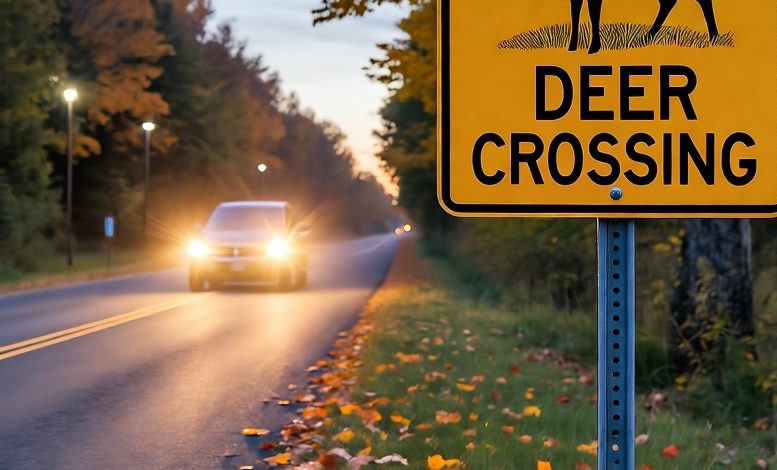
As the first chill of November settles across Southwest Missouri, drivers face a triple hazard on darkening roads: the recent end of daylight saving time, rapid temperature change and the heightened activity of deer during their mating season.
Missouri Joplin State Trooper Sam Carpenter joined the Morning Newswatch to discuss roadway safety during this time of year, and he noted early in the conversation that proper car maintenance can really help you avoid a really bad day.
“We don’t want you stranded on the side of the road when it’s 10 degrees outside,” Carpenter said. “You know, make sure your tires are good, you have plenty of tread depth. All those things. … You never know around here, we might be 80 degrees one day and a foot of snow the next. It’s Missouri, so it always keeps you guessing. Vehicle maintenance is important.”
With the many fluctuations in temperatures, there are also different variations of weather, which might be severe. Thunderstorms, snow storms, fog, anything is possible in the fall and winter months in Missouri.
“Slow down if it’s raining, slow down if it’s freezing temperatures because you don’t know what it did during the night when you slept,” Carpenter said. “You know, you can’t see that some of these curves get slick. It didn’t necessarily snow or ice, but it’s 12 degrees and the frost on the road is slick. You’re not going to manage the curve at the same speed you normally do. … If you’re a driver, it’s just your responsibility to be safe.”
On November 2, clocks fell back one hour, plunging evening commutes into twilight hours far earlier than the week before. This shift aligns perilously with the peak period for deer movement, transforming familiar routes into unpredictable gauntlets where wildlife and human traffic collide with alarming frequency.
The statistics paint a stark picture. Each year, more than 1.8 million animal-vehicle collisions occur in the United States, with deer accounting for the vast majority and inflicting over $10 billion in damage. These incidents surge by as much as 16 percent in the week following the time change, according to research analyzing over a million crashes across 23 states.
November stands as the deadliest month, when claims can climb to nearly 14 per 1,000 insured vehicles. From October through December, the risk escalates as deer forage, migrate, and breed, often crossing highways in herds under the cover of dusk and dawn. Nationwide, these encounters claim around 440 lives annually and injure tens of thousands more, with fatalities concentrated in rural stretches where speeds are high and visibility low.
“We have a lot of deer strikes this time of year,” Carpenter said. “With the time change, the sun being in a different spot in the sky, deer moving around. That’s the most common crash, obviously, as winter progresses.”
The convergence of factors amplifies the danger. Deer, crepuscular by nature, peak in activity between 5 and 7 a.m. and again from 5 to 9 p.m.—precisely when post-time-change rush hours blanket roads in shadow. Earlier sunsets mean commuters now navigate what was once twilight in outright darkness, reducing reaction times and making it harder to spot the reflective glint of antlers or eyes. Even in urban-adjacent areas, wooded edges and deer crossing signs signal hotspots where a single bounding silhouette can herald a trail of followers.
“Very rarely are deer by themselves,” Carpenter said. “You know, if you see one run or jump across the road, don’t think you’re in the clear. Don’t speed up, don’t get on your phone, continue to slow down, continue to have your head on a swivel, as we say, looking left and right, especially from the direction that deer came from because more than likely there’s more coming. Now. They may have been the last one in the line and that is good for you. But more than likely there’s more real close to the edge of the road.”
Safety experts emphasize proactive measures to counter these risks without relying on chance. Slowing down in zones marked by deer warnings proves essential, as does scanning road shoulders and ditches for movement beyond the immediate pavement. High-beam headlights should illuminate paths where legal, their flash potentially startling wildlife away while revealing eyeshine from afar. If a deer appears, drivers must resist the instinct to swerve sharply, which often leads to rollovers or head-on impacts. Instead, braking firmly while staying in the lane minimizes harm. Awareness of group behavior remains key—one deer typically signals more trailing in single file.
Beyond wildlife, the time shift disrupts sleep patterns, compounding fatigue that claims thousands of lives yearly. To combat drowsiness, establishing early bedtimes, moderating caffeine, and incorporating brief stops every two hours or 100 miles help maintain focus. Wiping distractions like phones and adhering to speed limits further fortifies defenses against the encroaching night.