



Naturalist says nine banded armadillos are here to stay
Most of us have only seen them as ‘road kill.”
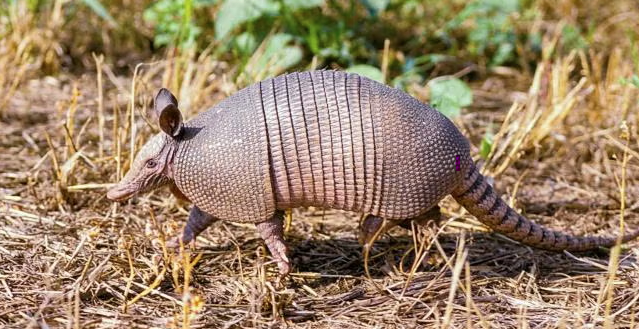
The nine-banded armadillo has been steadily moving from Texas into southwest Missouri and the entire four-state area over the last 50 years.
Jessie Ballard, a Missouri Department of Conservation naturalist at the Shoal Creek Conservation Education Center, says armadillos are definitely here to stay.
She says many people incorrectly think they are marsupials, similar to opossums.
“A mammal is defined by covered with fur and hair, along with some other characteristics,” she explains. “They have really thick, thin, fine hairs upon what people like to nickname their shell, even though that is kind of a bony plate that’s covers their bodies. But they are indeed mammals.”
She says armadillos are non-aggressive “scaredy cats” that function as prey animals.
They are known for their excellent digging abilities when searching for grubs and insects in laws but their digging can result in small holes or mounds that can be unsightly for homeowners.
Ballard says on a one-on-one basis, armadillos are anything but confrontational.
“They are trying to protect themselves as much as possible,” she says. “They don’t want to go after anyone. The only thing they want to do is survive. So, if they’re confronted, they are going to run and hide.”
Ballard says one common belief is that armadillos can roll themselves into a ball to avoid predators.
She says, unlike the six banded armadillos in South America, the nine-banded armadillos in Missouri actually have difficulty in performing that feat.
“They can’t actually do that very well like their cousins can,” she says.
Ballard says armadillos are beset with a number of physical limitations including short legs, poor running speed, and very poor eyesight.
All told, this has made them especially vulnerable to motor vehicles. One of their common means of escape actually works against them on roads and highways.
“In Texas, one of their biggest predators is rattlesnakes,” Ballard explains.
“They learned over time that if they jump straight up, then they could very likely get around those rattlesnakes.
“We don’t have as many rattlesnakes but we have a lot of roads,” Ballard says. “Jumping straight up doesn’t work very well when trying to defend themselves from cars.”
Another common belief over the years is that armadillos frequently carry leprosy.
Ballard says the subject hasn’t been conclusively studied for many years. However, as mammals, they could carry disease, especially rabies, but so could many other mammals.
What should you do if you have an encounter with one of these furry, hair-covered critters?
“It’s best if you come across an armadillo is to just leave it alone,” she says.
“Let it continue to live its best life out there in the wild.”