Economist Weighs In on Economic Outlook Following Midterm Elections
What do you think?
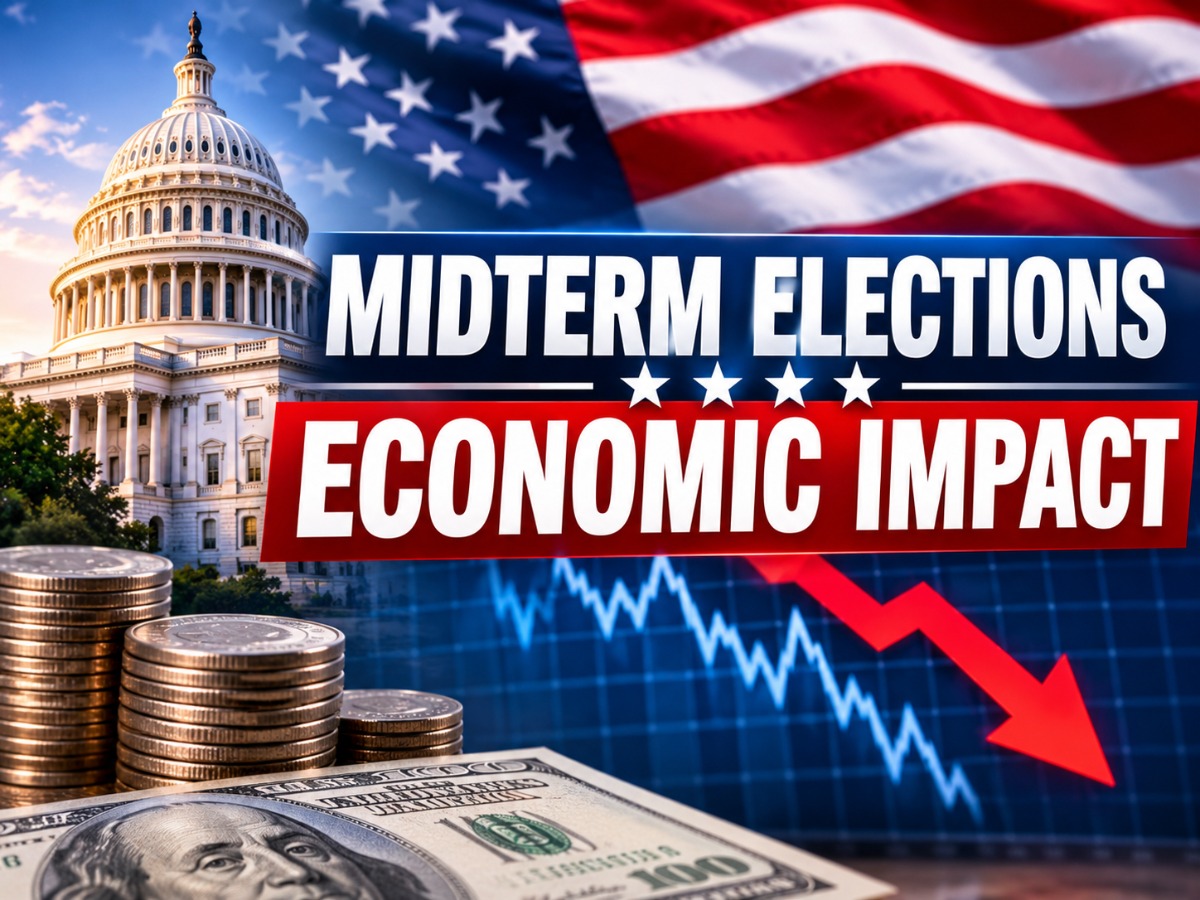
JOPLIN, MO - As Democrats prepare to take control of both chambers of Congress in January, Americans could face economic uncertainty, potential market volatility and renewed concerns over government spending and regulation, according to economist Dr. Dan Cravens.
Cravens, director of management, marketing and sports management programs at Augustana College, joined NewsTalk KZRG to discuss how the midterm election results could affect the American economy, consumers and retirement investments over the next two years.
Cravens said rising fuel prices played a significant role in motivating voters to shift their support toward Democrats, despite what he described as a historical conflict between the party's energy policies and the concerns voters expressed at the ballot box.
"You had people voting Democrat and a lot of cases switching their vote from what they did in 2024 in previous years and voting for Democrats largely driven off of fuel prices," Cravens said. "And it strikes me as kind of ironic because the Democratic Party historically has been anti fossil fuels."
However, Cravens pointed out that fuel prices had already begun declining before Election Day, raising questions about how much of the recent price movement was actually connected to the election.
He explained that fuel prices have a direct impact on shipping costs, which eventually affect the prices consumers pay for everyday goods.
"With regards to prices, a lot of the price hikes we see is related to the cost of shipping. Cost of shipping is impacted directly by fuel prices," Cravens said. "So with fuel prices continuing to go down, we should see some relief in consumer prices as well."
Cravens also raised concerns about the potential impact of Democratic leadership on American businesses, particularly in the technology sector.
He said investors have already shown signs of concern following the election, with the stock market experiencing a significant decline in the days afterward. Much of that concern, he explained, centered on artificial intelligence, data centers and the possibility of increased government restrictions.
"The Democrats have mentioned restricting AI development, restricting data centers," Cravens said. "And there's a lot of concern in the high tech sector, which again is a big part of our economy."
He warned that policies making it more difficult for technology companies to expand could affect business growth, employment and investment opportunities.
"Also too, the business community treats the Democratic Party with a little bit of fear and suspicion traditionally because the Democratic Party again is very pro government regulation," Cravens said.
"Government regulation tends to interfere with the ability of businesses to grow, add employees, move in different directions. It restricts the choices that those businesses can make."
Cravens said the combination of fuel prices, international conflicts and domestic political decisions contributed to the economic concerns surrounding the election.
"But again, all of this was driven by largely fuel prices, the state of the conflict in Iran, the situation of Persian Gulf and the fact that did not have a quick resolution," he said. "So, yeah, it's the economics, geopolitics and, you know, our domestic politics all kind of combine to have some economic impacts that consumers feel."
Retirement investments could feel the effects
The potential for increased regulation in the technology industry could also reach beyond Wall Street, affecting Americans' retirement savings.
Cravens said many 401(k) plans and investment portfolios have significant exposure to technology companies, which have performed well in recent years.
"If you see heavy regulation of these industries, these various high tech sectors, a lot of different, you know, 401k retirement funds, stocks and investments in general are tied to the tech sector," Cravens said.
He warned that restricting the industry's growth could have consequences for Americans who rely on those investments for retirement.
"And if you take that away from people's portfolios, remove that, it's going to have a negative impact," he said. "How much, what it looks like, you know, how this rolls out is going to be interesting to see."
However, Cravens noted that Democrats taking control of Congress does not mean every policy direction will change.
President Donald Trump will remain in the White House, leaving the executive and legislative branches under different political leadership.
"You still have Donald Trump as our president and you still have him probably continuing the same policies," Cravens said.
He expects that political divide could create additional gridlock in Washington, making it more difficult for lawmakers to reach agreements on economic priorities.
Could fuel prices have been influenced before the election?
During the interview, Cravens was also asked whether international players could have strategically influenced oil supplies and fuel prices ahead of the midterm elections.
While he said he generally does not subscribe to conspiracy theories, he acknowledged that major global players can have an impact on energy markets.
"Well, I tend not to be a big conspiracy theorist, but there major global players that can impact if they choose to, you know, certainly in the short term for a few weeks, strategically, oil supplies, you know, gas prices. Yeah, probably," Cravens said.
"So in the realm of possibilities, yes, I wouldn't rule it out."
He added that foreign interests could have had a preference for a particular election outcome and that the United States has adversaries with considerable influence and power around the world.
"Would they try to do that if they could? Quite possibly," he said.
Government shutdowns among concerns for the next two years
Looking ahead, Cravens said Americans should prepare for the possibility of political and economic instability as Democrats take control of Congress while Trump remains president.
One potential concern is another federal government shutdown.
With disagreements likely over budgets, government funding and spending priorities, Cravens said the divided political environment could make it difficult to reach agreements.
"I could see government shutdowns at the federal level being a possible issue that people would need to be concerned about," Cravens said.
"There may be some arguments over budgets and, you know, funding priorities, and you could see some government shutdowns, and that would tend to have an adverse impact on the economy, the uncertainty that would create."
Cravens also pointed to the approaching 2028 presidential election cycle as another factor that could influence the economy. As potential candidates begin announcing their campaigns and voters look toward the next presidential contest, political expectations could affect how businesses and investors make decisions.
Despite those concerns, Cravens does not expect the long-term economic consequences of the midterm election to be severe.
"But that will also probably shape kind of the economy to some degree, how people predict or see that election turning out," he said. "And it'll be interesting to see."
"My guess is the long term impact is not going to be severe. It does take us a little bit to get back to a kind of normalcy would be my guess."
For now, Cravens said the next two years could bring uncertainty as businesses, investors and consumers adjust to a new political landscape in Washington.