After Years of Searching, One Woman Turns Her Health Struggles Into a Way to Help Others
What do you think?

JOPLIN, MO. — Have you ever been so sick that you have no idea what is wrong or how to make yourself feel better? That was the reality for Ruth Sawkins in 2020, when her life began to change in ways she never expected.
Ruth has been an athlete for most of her life. She has competed in multiple marathons and even completed several Ironman's. If it weren't for having three children, she says she would have loved the opportunity to run professionally.
Today, she runs her own company, Rufus Racing, where she trains others to compete in marathons, triathlons and other endurance events.
But then, seemingly out of nowhere, she began to struggle. What once came naturally to her started becoming increasingly difficult.
"And so I noticed in 2020, like, I just was starting to struggle with my workouts and my training, and that wasn't normal for me. I'd been an athlete my whole life. And I just was tired, and I just would get sick a lot. And I just was like, I'm not really sure what's going on. So I was like, well, maybe I'm just, like, burnout."
Ruth initially pulled back from training, hoping that getting more rest and reducing her workload would help her recover. Instead, things continued to get worse.
Her sleep began to suffer, and she started experiencing strange physical sensations, episodes of anxiety and even night terrors. What began as a physical struggle was now taking a toll on her mental health as well.
"I was having issues sleeping. I just had a lot of really weird sensations and feelings that kind of scared me because I was like, well, what? Why would I feel like this? And then sometimes my heart would race and I would wake up in the middle of the night and feel extremely afraid and have a tremendous amount of anxiety. And I was like, well, what am I anxious about? And I couldn't think of anything. So I'm like, why am I feeling this way?"
Eventually, her condition reached a point where walking just half a mile would completely wear her out. For someone who had spent years running miles upon miles, struggling to walk around the block was something she couldn't explain.
Friends and family initially chalked it up to getting older. But Ruth was only 37 years old.
Then came a series of emergency room visits.
Along with the sleep disturbances and anxiety, Ruth began experiencing unusual abdominal pain. Despite seeking medical attention, she said she struggled to get anyone to take her concerns seriously.
"I had some really weird pains in my gut. Not like in my stomach, but in my gut. And I would try to go to the ER, and I tried to go to see doctors. And none of them had any answers. They all were just like, well, you're normal. It must all be in your head. So when I went to the ER, I actually had the on-call nurse practitioner just say, you know, I think it's all in your head."
Ruth wasn't someone who typically went looking for medical attention. In fact, she describes herself as the type of person who would push through an injury rather than make a big deal out of it.
But this was different.
"And I said, this is my first time in my life to go to the ER. Like, I'm not a hypochondriac, like, there's something wrong with me. And they were like, no, I think you've worked yourself up."
She began paying closer attention to the small details, tracking symptoms and looking for anything that might explain what was happening to her body.
But her fevers, heart rate and blood tests weren't providing the answers she needed. Time and time again, she was told everything looked normal.
"So this whole process was very confusing because I had everyone telling me my blood work looks fine, everything is fine, you're fine. And I'm like, I'm not fine. I'm not just getting older. Like, yes, I'm getting older. But you don't go from being a high-level athlete to can't walk a half a mile."

Searching for Answers
Ruth began thinking back to her mother's experience with a similar health struggle.
When Ruth was a child, her mother became sick with Lyme disease. She remembers watching her mother visit doctor after doctor, searching for answers that seemed impossible to find.
Now, years later, Ruth felt like she was experiencing that same frustrating journey.
"This was over a span of eight months to a year. I went to a functional medicine doctor, and none of them knew anything. None of them had a clue. None of them had a guess. And so I remember, like, my mom's experience traveling everywhere, trying to get answers. I was like, you know what, I think this would be better if I try and figure this out myself."
Ruth began researching on her own, trying to get to the root of an illness that no one seemed able to explain. Eventually, she started wondering if the problem could be coming from somewhere in her own home.
She recalled hearing stories about people becoming sick from mold exposure. With that possibility in mind, she went to her doctor and had testing done to see whether mold could be contributing to her symptoms.
The results came back normal, so she initially ruled it out. But her symptoms weren't going away.
Ruth said 2021 marked a rapid decline in her health.
"I had not felt great, but 2021 was just an absolute downhill slide in my health very quickly. So from March, I was kind of starting to get worse. And then by September, I was just scared I was going to have to be checked into, like, an insane asylum because of, like, the anxiety and the fear and just the weird things that were happening to my body. I was afraid. Multiple times I thought I was going to die. I felt so bad."
As the months passed, more testing followed.
Doctors tested her for several autoimmune conditions, including lupus and Hashimoto's disease. But those tests also failed to identify an explanation for what she was experiencing.
By 2022, Ruth was still searching.
One of the next steps in her journey was a BioScan test, which she describes as a different approach to evaluating the body. Unlike traditional testing that looks for specific conditions, Ruth said the scan provided information about potential nutrient deficiencies, areas of concern and possible toxins.
However, even that test didn't give her the full picture.
"What I learned from that test is, because I've repeated it multiple times in my healing journey, is that it doesn't catch everything, but what it does show you is very accurate. And so I had done one of those by a different company. And some of the nutrients they said to do was helping. I was doing. I still didn't know why I was so sick. I was like, I shouldn't need this. There's still a cause."
Then came a turning point.
Ruth and her husband decided to take a vacation and spend a couple of weeks visiting family.
While away, she noticed some improvements. She was sleeping a little better and experiencing less anxiety. At the time, she was simply grateful for any relief she could get.
But when they returned home, everything changed.
Within just 24 hours, her symptoms came rushing back.
"So we come home after being gone for two weeks, and within 24 hours of being home, I have 10 symptoms come back that I didn't even have before I left for the trip. I had gotten rid of several of those. Some of it was like twitching and jerking. Some of it was like waking up in the middle of the night. There was more. I haven't even had some of these symptoms for three to four months, and now I have them. I was writing them down as they were coming back in a 24-hour period. And I was like, that has to mean there's a problem at this house."
A home is supposed to be someone's safe place. It's where people go to rest, recover and escape the stress of everyday life.
But for Ruth, the place she expected to find comfort had become a source of fear and uncertainty.
"Like, your home is supposed to be your safe place, and it's supposed to be your place of comfort and your place of rest, and it wasn't for me."
The Home Search
After noticing the dramatic difference in her symptoms between being home and being away, Ruth began looking at places in the house she hadn't previously considered.
She started thinking about the possibility of mold hiding somewhere she couldn't see.
"I said, well, the most likely problem is mold. And I said, I already thought I wrote that off. So where else would mold be that I'm not aware of? And I said, okay, well, crawl spaces. Most houses in Missouri have crawl spaces. So crawl spaces are probably a common point because, like, it's wet under there sometimes or, you know, it's a closed-up space."
That suspicion led her to the crawl space beneath her home, where she eventually found Aspergillus mold.
For Ruth, this was the first major breakthrough in a years-long search for answers.
She said one of the biggest misconceptions surrounding mold is that people think it is always visible, black or accompanied by a noticeable smell.
"Everyone thinks they know about mold. There's so little education. We think it's visible at all times. We think it's black. We think, it'll smell, and we think it's not very common."
Ruth also began learning about the importance of properly removing mold rather than simply covering it up.
"Because the biggest thing about mold is you've got to remove it. You cannot spray it, you cannot paint over it. It has to be removed."
She explained that the appropriate remediation depends on the material affected. Some nonporous surfaces can be cleaned, while porous materials that have absorbed mold may need to be removed and replaced.
As she learned more, Ruth also began looking beyond her own symptoms.
Initially, she was the only one in her household experiencing major health problems. Her husband and three children weren't nearly as sick as she was, so she didn't immediately connect their smaller health complaints to the same possible environmental issue.
Looking back, however, she began recognizing symptoms throughout her family.
Her children experienced recurring cavities, mouth sores, digestive problems, vision issues and even depression. Her husband experienced skin problems.
None of their symptoms looked the same.
"So when we moved out, several things that my kids were experiencing, like they were getting recurring cavities or mouth sores. My daughter was having depression issues at nine years old, and she didn't know why she was upset or why she was crying. She couldn't tell me why. She was having stomach aches. My middle son was having all kinds of digestion issues. My oldest son was having vision issues. My husband was having skin issues. So no one had the same issues. None of their symptoms matched my symptoms, and none of them were as sick as I was."
Understanding the potential hazards
What started as a personal search for answers eventually became something much bigger for Ruth. As she continued researching, she began studying how the indoor environment can affect a home's occupants.
She learned about other potential environmental concerns, including radon and lead, and began looking at homes differently. Ruth said one of the biggest things she discovered was how conditions beneath a home can affect the air inside it. In her own house, she believed gases associated with the mold in the crawl space were moving through the flooring and into the living areas.
"It was less about the spores and more about the toxic gases that come off of toxic molds."
She also learned that identifying the source of an exposure is only part of the process. Removing the source and addressing affected materials can take time.
Ruth said her family initially stayed in the house while working through remediation. They eventually moved out, but the process of identifying the problems, addressing them and continuing her own recovery took years.
Looking back, she estimates the process of getting healthy took about five years, largely because she was learning everything on her own.
"If I knew what I knew now, I think it would have probably taken me about six months to get better, but it took me about five years."
What To Look Out For
That experience also changed what she looks for when evaluating a home.
Ruth said potential signs of moisture problems can include peeling or bubbling paint, discoloration and evidence of previous leaks.
She pays particular attention to areas where water could enter or collect, including ceilings, underneath sinks and around plumbing.
One of the unusual places she checks is underneath toilet tank lids. She explained that mold growth in those areas can sometimes provide a clue about conditions inside a home, although a visual inspection alone cannot determine whether a house has an indoor mold problem.
She also emphasized the importance of controlling moisture.
Mold spores are naturally present in the environment, she explained, but moisture can create the conditions that allow mold to grow.
For crawl spaces, Ruth believes proper encapsulation, moisture control and air movement are important considerations.
She hopes to see building practices in the region place more emphasis on properly protecting crawl spaces, particularly in areas where moisture can be an issue.
Her experience also taught her that not every mysterious health problem is necessarily caused by mold.
Ruth recalled a conversation with a drywall contractor who described experiencing unexplained symptoms. After asking more questions, she began to suspect an issue with sewer gases entering his RV through a ventilation problem.
She encouraged him to investigate the issue, and he later addressed it.
The experience reinforced something she had learned throughout her own journey: environmental exposures can take different forms, and finding the actual source matters.

The Birth of Honeysuckle Homes
As Ruth continued learning about homes, building materials and indoor environments, she began thinking about how she could use that knowledge to help others.
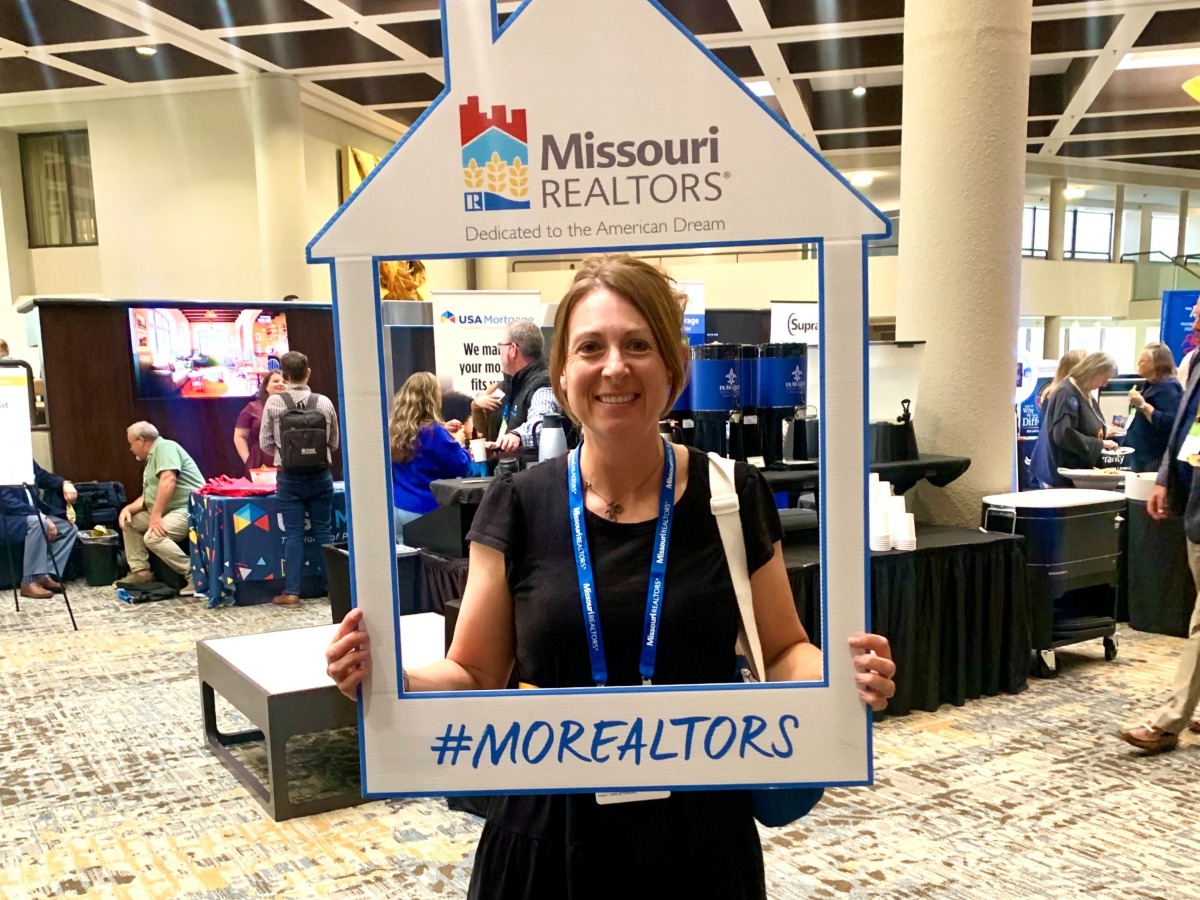
Her experience eventually led her into real estate.
She had already become interested in studying homes and had started working with rental properties. She said part of her motivation was wanting to provide other people with a safe place to live.
That eventually led to the creation of Honeysuckle Homes.
She wanted to take what she had learned through her own health struggles, remediation experience and building biology studies and turn it into something that could benefit others.
The name itself has a personal connection to Missouri.
Originally from Texas, Ruth spent time visiting her grandparents in the Joplin area while growing up. Their backyard was filled with honeysuckles, something she remembers fondly.
She eventually moved to Joplin to attend college at Ozark Christian College and has now called the area home for about 20 years.
"When I thought about, like, I want to start, I don't want to just be a realtor in name. I want to have a company. I want to have a purpose. I want to have a goal."
She said the honeysuckle flower reminded her of those childhood visits and the feeling of home.
The company's logo reflects that same idea, featuring honeysuckles, fireflies and a home with a backyard.
For Ruth, those images represent the kind of environment she wants to help create for others: somewhere peaceful, welcoming and safe.
"I was not living in a safe place. Like, my home was killing me, and I didn't have anywhere to go for a while. And that was horrible."
Through Honeysuckle Homes, Ruth hopes to help people find homes that are not only places to live but places where they can feel comfortable raising their families.
She also wants to provide safe rental properties and eventually hopes to develop and build homes of her own.
Her goal is to make information about healthier living environments more accessible, rather than something only people with large budgets can afford.
A New Chapter
Ruth's health journey eventually became something bigger than finding answers for herself. After years of researching, learning and navigating her own experience, she began looking for ways to share what she had learned with others.
That desire led to the creation of Honeysuckle Homes, a resource she hopes will help people better understand their living environments and the potential impact those environments can have on their well-being.
Rather than encouraging people to chase every individual symptom, Ruth believes in identifying the underlying problem and addressing it.
She often refers to that main source as the "linchpin."
"Don't chase this, that and the other. Go to the main source of the problem, pull the linchpin."
She recognizes that identifying and addressing environmental problems is not always simple or inexpensive. Finding the source of an exposure, making necessary repairs and creating a healthier living environment can be a long process.
But she wants to make that process easier for others by taking years of research and experience and turning it into practical information people can understand and use.
Her goal is to help people identify the most important steps they can take for their homes without feeling overwhelmed by the amount of information available.
For Ruth, Honeysuckle Homes is still in its early stages, but she sees plenty of room for it to grow.
What began as a personal search for answers has become a mission to help others better understand their homes, recognize potential environmental concerns and find resources to make informed decisions.
After years of struggling to feel at home in her own house, Ruth now hopes to help others find what everyone deserves:
A sweet, safe place to live.