Shubert Theatre Sign Added to Joplin Heritage Trail
What do you think?

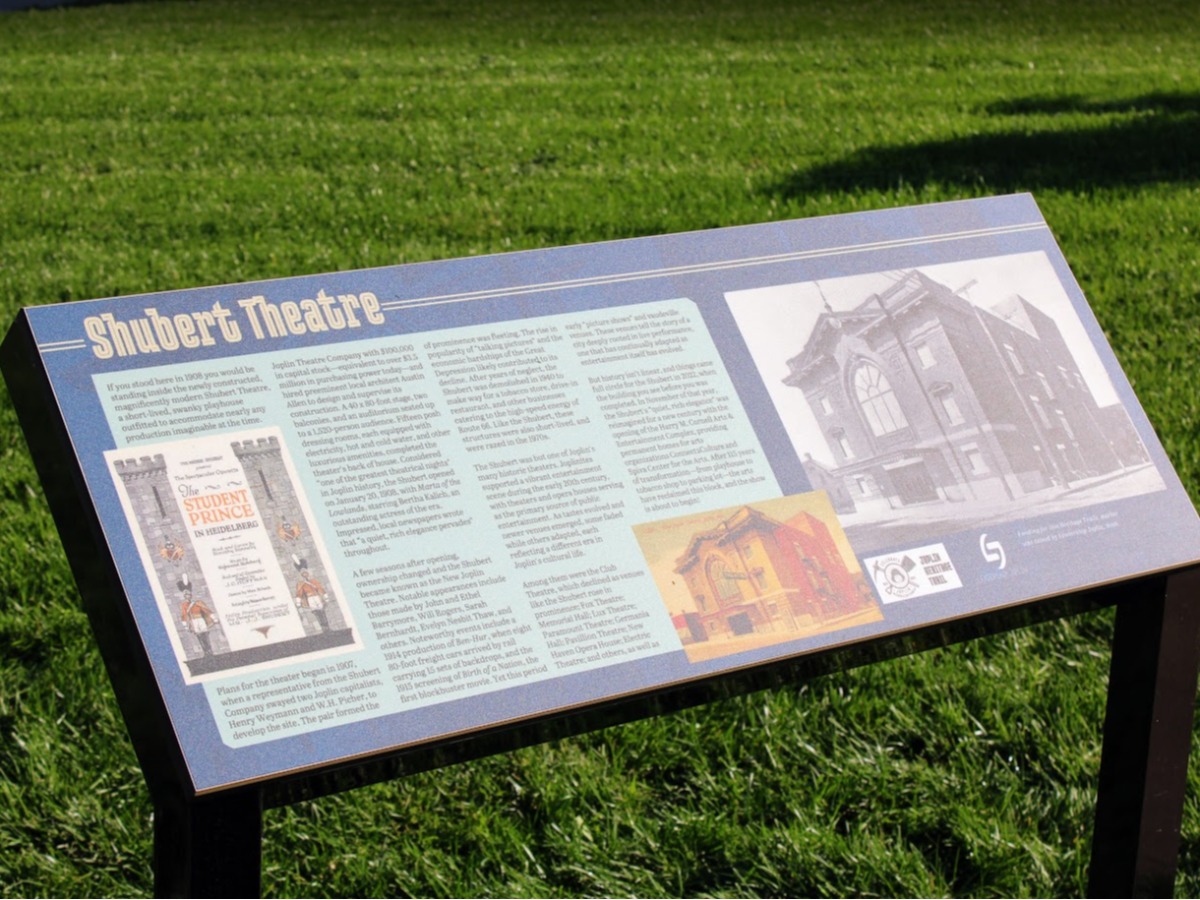
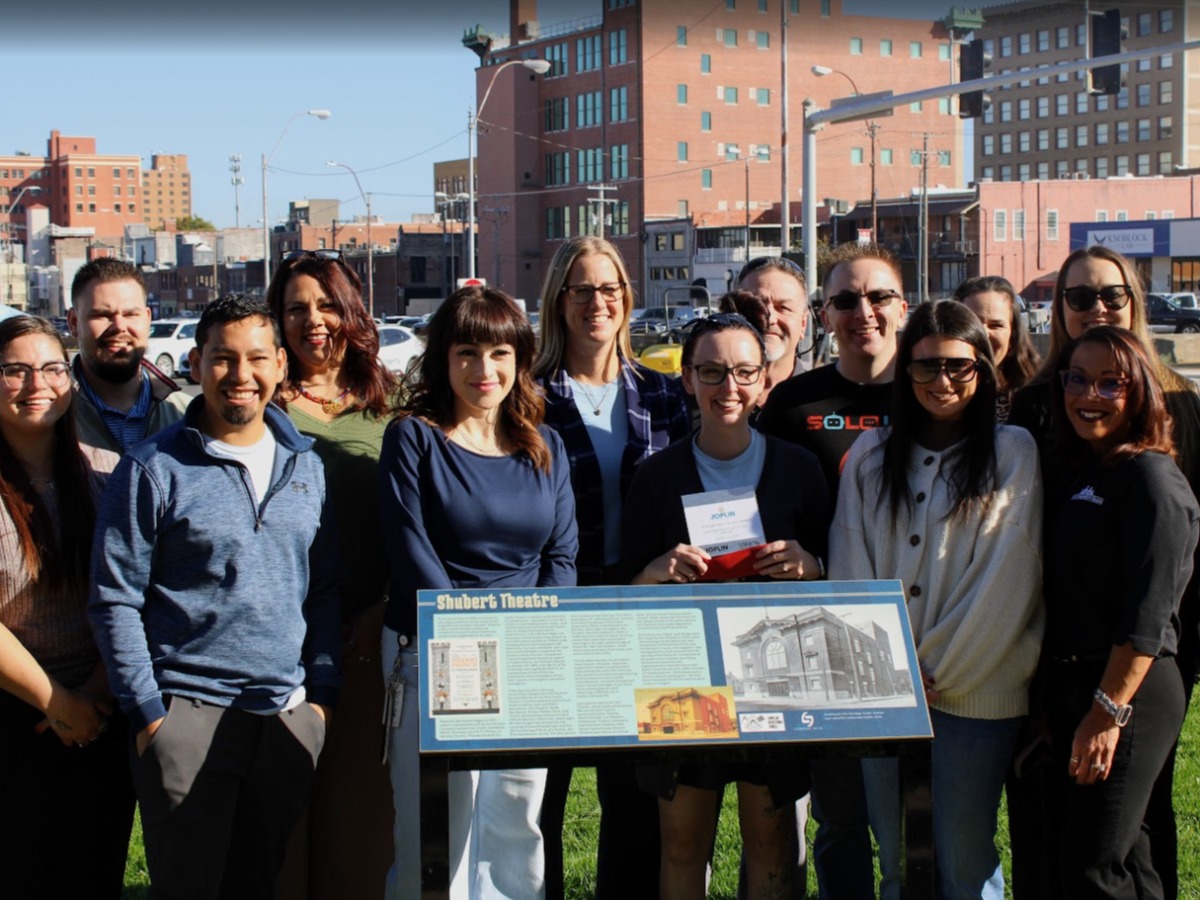
JOPLIN, MO. — A new historical sign commemorating the former Shubert Theatre was unveiled in downtown Joplin during a ribbon-cutting ceremony, marking another step in an ongoing effort to preserve the city's history through the Joplin Heritage Trail.
The sign, funded by the Leadership Joplin Class of 2026, highlights the history of the Shubert Theatre and its role in Joplin's early performing arts scene. The site is now home to the Cornell Complex, which houses Connect2Culture's Beshore Performance Hall and the Spiva Center for the Arts.
Jill Halbach, executive director of Post Art Library, and Emily Frankoski, executive director of Connect2Culture, helped develop the historical narrative featured on the sign.
"The Shubert Theatre was one of Joplin's early theaters, and it has a really interesting history," Halbach said. "It was one of the go-to places for people in Joplin."
The theatre opened in 1908 and was known for its size and lavish features, according to Halbach and Frankoski. Frankoski said the Shubert's stage was comparable in size to the entire performance space at the current Beshore Performance Hall, and the theatre included more than 10 dressing rooms.
A full-circle moment for downtown
The new sign represents a return to the arts for a site that has undergone several transformations over the past century.
The Shubert Theatre once stood on the property before being demolished in 1940 to make way for businesses along Route 66. Those businesses were later removed in the 1970s to create a parking lot for Memorial Hall.
The parking lot was eventually redeveloped into the Cornell Complex, which opened in 2022 and brought performing arts and visual arts back to the location.
Frankoski described the redevelopment as a full-circle moment, with the site once again serving as a place for the community to experience the arts.
"It's kind of nice that we can have this little piece of land in the heart of downtown Joplin return to what the people at that time thought was important as well, because the arts are still important today," Frankoski said.
During construction of the Cornell Complex, workers also uncovered what Halbach described as mosaic-like material that may have been associated with the Shubert Theatre in the early 1900s.
Preserving Joplin's history
The Shubert Theatre sign is part of the Joplin Heritage Trail, an initiative of the city's Celebrations Commission that began approximately five years ago. The project places signs at historic locations throughout the community, allowing residents and visitors to learn about buildings and landmarks that once stood there.
Signs can be found at locations including Landreth Park, East Town, Tin Cup Bridge and Spiva Park with additional installations planned.
Halbach said the project has developed in phases since approximately 2021, with the first sign installed in 2022. She and Frankoski continued helping develop the historical narratives as the trail expanded.
The opportunity to work with Leadership Joplin helped turn the Shubert Theatre sign from a written historical account into a permanent marker at the site.
"Of course, we can write, but we also need dollars to make things happen," Frankoski said, crediting Leadership Joplin with funding the sign.
Leadership Joplin project looks to the future
Jess Sickman, director of Joplin Area Catholic Schools and chair representative for the Leadership Joplin Class of 2026, said the Shubert Theatre sign was one part of a larger class project focused on celebrating Joplin's history.
The class adopted the theme "Honor the past, engage the present and inspire the future" and created a monument sign in Mural Park as another part of the initiative.
A QR code on the Mural Park sign directs visitors to JoplinStoryProject.com, a website developed by the class to share the community's history.
Sickman said the project aims to preserve the stories that helped shape Joplin, recognize what the community is accomplishing today and encourage younger generations to continue building on that legacy.
"We don't want to forget what makes Joplin amazing," Sickman said.
Richard Chambers, a member of the Leadership Joplin Class of 2016 and an ambassador for the Joplin Area Chamber of Commerce, also praised the project. Representing Southwest Missouri Bank, sponsor of the chamber's ambassador program, Chambers thanked the organizations and individuals who helped bring the sign to life.
He congratulated the Class of 2026 and recognized the collaboration among Leadership Joplin, the chamber, Halbach and Frankoski.
More signs planned
Organizers encouraged residents and visitors to read the Shubert Theatre sign and explore the other historical markers throughout the city.
The Heritage Trail will continue to develop as opportunities for collaboration and funding become available.
Halbach hinted that another sign could be coming to Ewert Park, which is currently undergoing reconstruction, though she did not provide a timeline.
For organizers, the Shubert Theatre marker serves as a reminder that Joplin's history remains pertinent to the community and its members. Chamber reiterated the importance of preserving and remembering that history, stating, "And listen, if you don't already know, you need to know that Joplin has a very rich history. And it's a history that's worth learning and remembering."
