Trump says let data reign, other Republicans see it differently
What do you think?
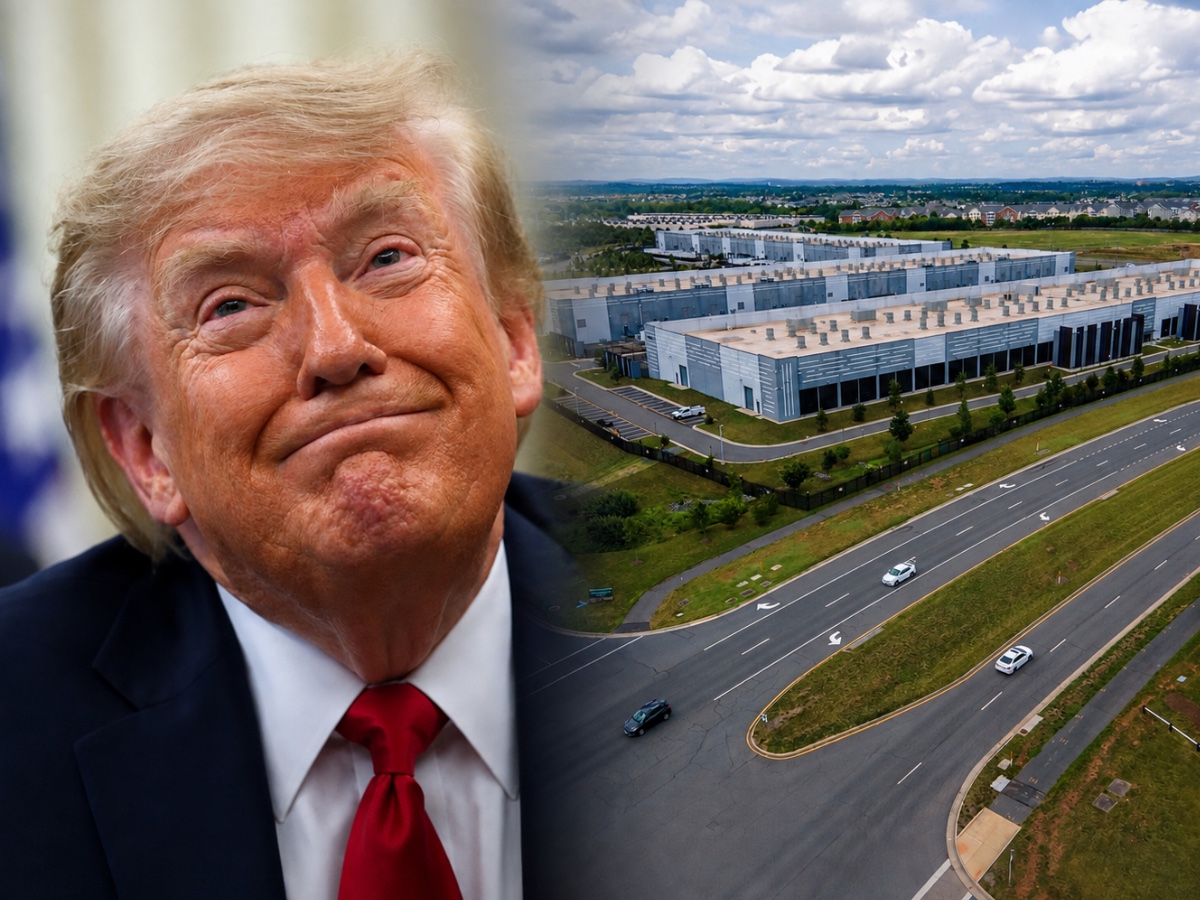
President Donald Trump is doubling down on data centers as the massive facilities face growing resistance nationally and here in our area.
Trump said communities that turn away data centers risk becoming “backwards and poor,” arguing the projects can bring investment, tax revenue and jobs while helping the United States compete with China in artificial intelligence.
The message closely mirrors one Southwest Missouri Congressman Eric Burlison has delivered for months.
Burlison has argued Missouri should aggressively pursue data center investment and has also pointed to competition with China. During a June interview on Newstalk KZRG, Burlison said concerns over water consumption can be exaggerated, particularly with newer closed-loop cooling systems. He has also highlighted the potential property tax benefits for local communities.
But reaction to Trump’s comments shows the issue does not fall neatly along political lines.
A sampling of replies to Trump’s social media post — not a scientific measure of public opinion — included users who described themselves as Trump supporters but questioned his position on data centers. Their concerns centered largely on water supplies, higher electric bills, noise, land consumption and the possibility that communities could absorb the costs while receiving relatively few permanent jobs.
One commenter simply asked, “What about our water supply?” Others argued data centers could strain electric grids or increase utility rates. Several raised concerns about the constant noise associated with large facilities, while others questioned whether agricultural or undeveloped land should be converted for data center projects.
Those concerns closely resemble arguments heard during Joplin’s own debate over data centers.
Joplin recently approved regulations governing where the facilities can be built and setting standards for noise, cooling systems, utility infrastructure and setbacks. Data centers must be located in heavy industrial districts and generally remain at least 600 feet from residential and other protected properties.
The City Council stopped short of requiring each project to receive a special use permit, despite residents who argued the additional process would provide greater public oversight.
Missouri lawmakers have also taken different approaches.
U.S. Sen. Josh Hawley has introduced legislation that would require data centers to secure power separately from the existing electrical grid and prevent their energy demands from increasing utility bills for other customers.
State Sen. Jill Carter has also taken a more cautious approach locally. Carter has said the demand for data centers is growing but questioned how communities can capture the economic benefits without being negatively affected.
She has emphasized property rights, utility costs and local decision-making and hosted a community meeting this summer focused partly on data center development.